
Master the VWAP Day Trading Strategy: A Beginner’s Guide to Precision Entries
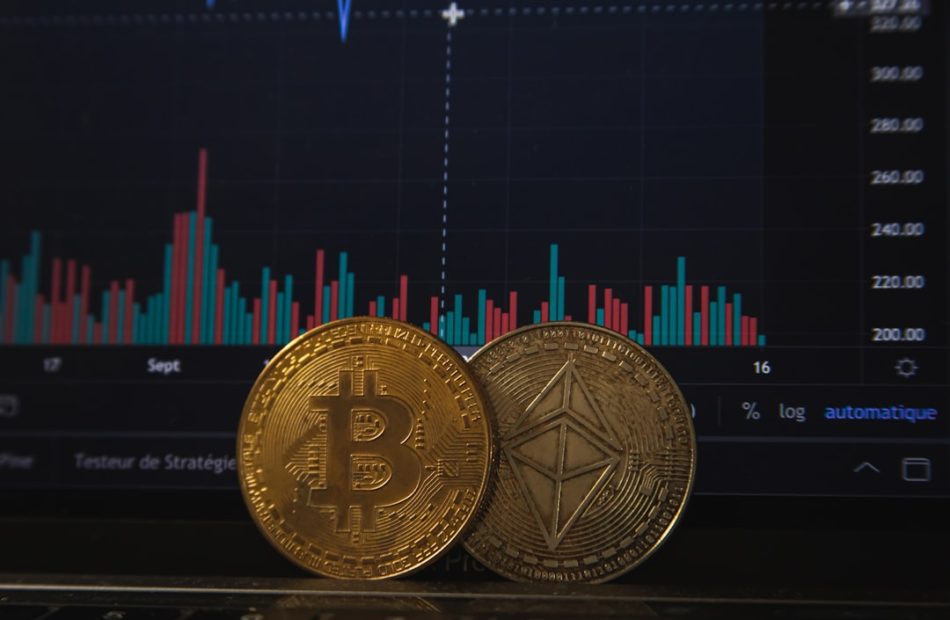
If you’ve ever watched a crypto chart and wondered why price seems to bounce off a certain line like it’s magnetic, you’ve probably seen the VWAP indicator in action. VWAP, or Volume-Weighted Average Price, is one of the most powerful tools in a day trader’s arsenal. It’s not just a line on a chart—it’s a real-time measure of where the market really values an asset, factoring in both price and volume. For beginner to intermediate traders, mastering VWAP can transform your entries and exits from guesswork into a disciplined, data-driven process. In this guide, we’ll break down exactly how to use VWAP for day trading crypto, with clear rules and risk management tips to keep you on the right side of the trade.
How It Works
VWAP is calculated by taking the cumulative total of price multiplied by volume, divided by cumulative volume, for a given period (usually a single trading day). In simple terms: it tells you the average price an asset has traded at, weighted by how much was traded at each price level. Institutions and algorithmic traders use VWAP to execute large orders without moving the market too much. For retail traders, VWAP acts as a dynamic support and resistance level. When price is above VWAP, the market is considered “bullish” (buyers are in control). When price is below VWAP, it’s “bearish” (sellers are in control).
The Setup
To start trading with VWAP, you’ll need a charting platform that includes the indicator (most do—TradingView, Binance, and others have it built-in). Set your chart to a lower timeframe—5-minute or 15-minute works well for day trading. The setup is simple:
1. Identify the trend: If price is consistently above VWAP with rising volume, look for long entries. If price is below VWAP with falling volume, look for short entries.

2. Wait for a retest: Don’t chase price. Wait for price to pull back and touch the VWAP line. This is your potential entry zone.
3. Confirm with volume: Look for a spike in volume as price touches VWAP. This confirms that institutional money is stepping in at that level.
4. Enter the trade: For a long, enter when price bounces off VWAP with a bullish candlestick close. For a short, enter when price rejects VWAP with a bearish close.
Example: Bitcoin is trading at $60,000, and VWAP is at $59,800. Price dips to $59,800, volume surges, and a green candle closes above VWAP. You enter long with a target of $60,200 (a typical 1:2 risk-reward).
Risk Management
No strategy works without solid risk management. Here’s how to protect your capital:
- Stop Loss: Place your stop just below the VWAP line for long trades (or above for shorts). A common rule is 0.5% to 1% below VWAP, depending on volatility. If price closes below VWAP, the bullish bias is invalidated.
- Position Size: Never risk more than 1-2% of your trading account on a single trade. VWAP setups can fail if a major news event hits, so keep size small.
- Profit Targets: Use a 1:2 or 1:3 risk-reward ratio. For example, if your stop is $200 away, aim for a $400 or $600 profit. You can also use the previous day’s high or low as a target.
- Avoid Overtrading: VWAP works best in trending markets. In choppy, sideways action, price can cross VWAP repeatedly—stay out until you see a clear trend.
Conclusion
VWAP is more than just a fancy line—it’s a reflection of where the smart money is trading. By combining VWAP with volume confirmation and disciplined risk management, you can take day trading from emotional to systematic. Start by practicing on a demo account or with small size. Watch how price reacts to VWAP over several sessions. Soon, you’ll see the market in a whole new light—one where every bounce and rejection becomes a potential opportunity. Trade smart, stay patient, and let VWAP guide your decisions.