
The Gap Fill Strategy: A Beginner’s Guide to Trading Market Voids
Ever looked at a crypto chart and seen a sudden, empty space between one candle’s close and the next candle’s open? That’s a price gap. In the fast-moving world of crypto, these gaps happen frequently, especially over weekends or after major news. Many traders believe these gaps are like magnets for price—they often get “filled” as the market returns to that empty zone. This creates a classic, beginner-friendly trading opportunity known as the Gap Fill Strategy.
Let’s break down how you can spot and trade these setups without getting overwhelmed.
🚀 Recommended Platform
For the best charting tools to spot this pattern, try Bitget.
How the Gap Fill Strategy Works
Think of a price gap as a market oversight. When Bitcoin or any other asset gaps up (leaves a space below), it often leaves behind unfilled buy orders or an area of low liquidity. The theory is that price has a high probability of retracing to “fill” that void before continuing its primary trend. It’s not a guaranteed rule, but it’s a consistent enough pattern to build a simple strategy around.
The Two Main Types of Gaps:
* Gap Up: The current candle opens above the previous candle’s high, leaving an empty space below.
* Gap Down: The current candle opens below the previous candle’s low, leaving an empty space above.
The strategy aims to fade the gap—meaning you trade in the opposite direction of the gap, expecting price to return to fill it.
The Setup: Finding and Trading a Gap
Step 1: Identify a Clean Gap
Look for a significant, clear space between candles on your chart (use a 4-hour or daily timeframe for cleaner signals). Avoid tiny gaps within normal volatility. The gap should be visually obvious.
Step 2: Wait for Confirmation
Don’t jump in immediately! The key is patience. Wait for the price to start reversing back toward the gap.
* For a Gap Up, wait for the price to stop making higher highs and show signs of rejection (like a bearish engulfing candle).
* For a Gap Down, wait for the price to stop making lower lows and show strength (like a bullish engulfing candle).
Step 3: Enter the Trade
Place your entry order once you see this confirming candle close.
* Trade Direction: SELL for a Gap Up. BUY for a Gap Down.
* Profit Target (Take Profit): Set your target at the far side of the gap—aim for the candle’s close that started the gap. Don’t be greedy; the fill is your goal.
Risk Management: Your Safety Net
This strategy is simple, but without proper risk management, it’s dangerous. Here’s how to protect your capital:
Image by Towfiqu barbhuiya

1. Always Use a Stop-Loss (SL): This is non-negotiable. Place your stop-loss on the other side of the gap.
* For a Gap Up SELL trade: Place your SL just above the high of the gap.
* For a Gap Down BUY trade: Place your SL just below the low of the gap.
This defines your maximum risk if the gap doesn’t fill and the trend continues.
2. Mind the Trend: Gaps that occur in the direction of the larger trend (e.g., a gap up in a strong bull market) are less reliable to fade. The strongest signals often occur when the gap is against the short-term momentum or in a ranging market.
3. Risk-Reward Ratio: Before entering, ensure your potential profit (distance to target) is at least 1.5 to 2 times your potential loss (distance to stop-loss). If it’s not, the trade isn’t worth taking.
4. Start Small: Use a small position size (1-2% of your portfolio) while you’re practicing. Not every gap fills immediately; some may take days.
Conclusion
The Gap Fill Strategy is a fantastic tool for beginners because it provides clear visual levels for entry, exit, and stop-loss. It teaches discipline in waiting for confirmation and respecting risk management. Remember, no strategy works 100% of the time—gaps can also be “breakaway” gaps that signal a powerful new trend and never look back. That’s why your stop-loss is your best friend.
Start by looking for gaps on the charts of major cryptos like Bitcoin and Ethereum. Mark them, watch how price behaves, and practice identifying the setups in a demo account. With patience and strict risk rules, trading the gap fill can be a structured way to participate in the markets. Happy trading!
Ready to spot your first gap? Open your chart and look for those market magnets!
VWAP Day Trading: The Smart Money’s Favorite Tool (Made Simple)
Ever feel like you’re trading against an invisible current? That the market has a mind of its own, and you’re just guessing? You’re not alone. Many day traders jump in without a true sense of where the market’s “fair value” is at any given moment. That’s where the VWAP (Volume-Weighted Average Price) comes in. It’s not just another squiggly line on your chart; it’s the single most important benchmark used by institutional traders, hedge funds, and market makers. Learning to trade with it is like getting a peek at the smart money’s playbook. This guide will break down a simple, powerful VWAP day trading strategy you can start using today.
What is VWAP & Why Should You Care?
Try it on Bitget.
VWAP stands for Volume-Weighted Average Price. Unlike a simple moving average that just averages closing prices, VWAP calculates the average price a security has traded at throughout the day, weighted by volume. In simple terms: it tells you the true average price where most of the day’s trading has occurred.
Think of it as the market’s consensus on fair value for the session. For day traders, it’s crucial because:
– Institutions benchmark against it: Big players often aim to get fills at or better than the VWAP.
– It defines trend: Price above VWAP = bullish intraday bias. Price below = bearish bias.
– It provides dynamic support/resistance: The line acts as a magnet and a key level throughout the day.
The VWAP Day Trading Strategy Explained
This strategy focuses on trading the pullback to the VWAP in the direction of the prevailing intraday trend. It’s a high-probability, mean-reversion setup.
How It Works: The Core Concept
The market often trends in a direction (up or down) during the day. As it trends, price will periodically pull back or “revert to the mean”—which, for the day, is the VWAP. Our job is to catch these pullbacks as entry opportunities to re-join the trend.
The Setup: Your Step-by-Step Blueprint
Step 1: Identify the Intraday Trend (After the First 30-60 mins)
Don’t trade the open chaos. Let the market settle. Then, determine the trend:
– Bullish Trend: Price is consistently making higher highs/lows and trading above the VWAP line.
– Bearish Trend: Price is making lower highs/lows and trading below the VWAP line.
Step 2: Wait for the Pullback
In an uptrend, wait for price to dip back down toward the VWAP line. In a downtrend, wait for price to rally back up toward the VWAP line. Be patient. The pullback should be a clear move against the main trend.
Image by Oren Elbaz

Step 3: The Entry Signal
Do NOT enter the moment price touches VWAP. Wait for price to show rejection of the VWAP and resumption of the trend. Look for:
– Bullish Entry (Long): Price pulls to VWAP, then forms a bullish candlestick pattern (hammer, bullish engulfing) or a strong green candle closing above VWAP.
– Bearish Entry (Short): Price rallies to VWAP, then forms a bearish pattern (shooting star, bearish engulfing) or a strong red candle closing below VWAP.
Step 4: Place Your Stop Loss
Your stop loss should be placed on the other side of the VWAP, acknowledging the trend has potentially failed.
– Long Trade: Stop loss just below the recent swing low near the VWAP.
– Short Trade: Stop loss just above the recent swing high near the VWAP.
Step 5: Take Profit
Aim for a risk-to-reward ratio of at least 1:1.5 or 1:2. Common profit targets include:
– The previous intraday high (for longs) or low (for shorts).
– A fixed multiple of your risk (e.g., if you risk $50, target $75-$100 profit).
– Trail your stop loss as price moves in your favor to lock in gains.
Risk Management: The Non-Negotiable Rules
1. VWAP is a Day Trading Tool: The VWAP resets every new trading day. Do not use this strategy for overnight positions.
2. Respect the Trend: Only take trades in the direction of the intraday trend (price relative to VWAP). Never fade the trend just because price is at VWAP.
3. The 2PM Rule: Be extra cautious with new VWAP trades after 2 PM (Eastern). Volume often dries up, and VWAP becomes less reliable.
4. Volume is Key: The strategy works best on high-volume assets (major crypto pairs, large-cap stocks). Low volume = weak VWAP signals.
5. One Trade at a Time: Focus on mastering this one setup before layering on other indicators or taking multiple positions.
Conclusion: Your New Trading Anchor
The VWAP day trading strategy gives you a structured way to align with the market’s institutional flow. It replaces guesswork with a clear, volume-based framework for identifying trend, value, and high-probability entries. Remember, no indicator is holy. VWAP won’t work 100% of the time, but by combining it with strict trend identification and risk management, you add a powerful, professional-grade tool to your arsenal. Start by applying it in a demo account. Watch how price interacts with the line. With practice, you’ll begin to see the market’s rhythm—and trade with its current, not against it.
Next Step: Open your charting platform (TradingView, etc.), add the VWAP indicator, and just observe for a few days. Don’t trade yet. Watch how price respects or rejects it. This observation is the first step to mastery.
The Wyckoff Method: A Trader’s Blueprint for Reading the Market
Ever feel like the market is moving in mysterious ways, leaving you guessing what comes next? What if you could learn to read the intentions of the big players—the “smart money”—and position yourself before major moves? That’s the promise of the Wyckoff Method, a timeless framework that helps traders understand the market’s underlying structure.
Developed by Richard Wyckoff in the early 20th century, this method is based on the idea that markets are driven by the accumulation (buying) and distribution (selling) of assets by large institutions. By learning to spot these phases on a chart, you can stop reacting to every price wiggle and start trading with the trend.
How it Works: The Core Principles
👋 Trader’s Choice: We use Binance for this strategy due to their low fees.
The Wyckoff Method is built on three fundamental laws:
1. The Law of Supply and Demand: This is the primary driver. When demand exceeds supply, prices rise. When supply exceeds demand, prices fall. Wyckoff teaches you to gauge the balance between the two.
2. The Law of Cause and Effect: Think of this as preparation and result. The “Cause” is a period of accumulation or distribution (the sideways movement). The “Effect” is the resulting price move that follows. A larger Cause (longer consolidation) typically leads to a larger Effect (stronger trend).
3. The Law of Effort vs. Result: This is about confirmation. The “Effort” is the trading volume. The “Result” is the price change. If high volume (big effort) results in only a small price move (little result), it signals a potential reversal. The smart money might be absorbing all the selling or buying.
The Setup: The Wyckoff Cycle
Markets don’t just go up and down randomly. According to Wyckoff, they move through a recurring four-phase cycle. Learning to identify which phase you’re in is the key.
Phase 1: Accumulation
This is where the smart money quietly builds a position after a downtrend. Price action is typically range-bound and choppy. The goal here is to identify the end of this phase and prepare for the next uptrend.
Phase 2: Markup (Uptrend)
This is the bullish trend we all love. Demand is in control, and the price breaks out of the accumulation range with increasing volume. This is the phase where you want to be long and riding the trend.
Phase 3: Distribution
After a strong markup, the smart money begins to sell its position to the late-coming public. Like accumulation, this phase is range-bound, but it happens after an uptrend. It sets the stage for the next downturn.
Phase 4: Markdown (Downtrend)
Supply takes over, and the price breaks down from the distribution range. This is the bearish trend phase. Wyckoff traders might look for shorting opportunities or, more safely, simply stay out of the market.

Risk Management: The Wyckoff Way
Wyckoff isn’t just about entries; it’s about prudent trading. Here’s how to manage risk within this framework:
* Trade with the Cycle: Your highest-probability trades are in the direction of the newly established phase (e.g., long in Markup, short in Markdown). Fighting the identified phase is a major risk.
* Use the “Spring” & “Upthrust”: These are key reversal signals at the end of Accumulation and Distribution, respectively. A Spring is a false breakdown below support that shakes out weak holders before a rally. An Upthrust is the opposite—a false breakout above resistance. Use these as areas to place stop-loss orders.
* Confirm with Volume: Never trust a price move without volume confirmation. A breakout on low volume is suspect and more likely to fail.
* Define Your Stop: Always place a stop-loss order. In an accumulation play, a logical stop is below the recent swing low (or below the Spring). In distribution, it’s above the swing high.
Conclusion
The Wyckoff Method is more than a set of patterns; it’s a logic for understanding market structure. It teaches patience, discipline, and how to see the story behind the price bars. For beginner and intermediate traders, it provides a powerful lens to filter out market noise and focus on high-probability setups driven by the major players.
Start by practicing phase identification on historical charts. Look for the Accumulation and Distribution ranges. Notice how trends emerge from them. Don’t try to master it overnight—incorporate its principles slowly into your analysis. With practice, you’ll begin to see the market not as a chaotic mess, but as a readable narrative of supply and demand.
Beyond the Hype: How to Value GameFi Projects Like a Pro
Introduction
You’ve seen the headlines: “Play-to-Earn Game Makes Millionaires Overnight!” The GameFi space is exploding, blending gaming, finance, and NFTs into a thrilling new frontier. But for every Axie Infinity success story, there are dozens of projects that fizzle out. How do you separate the next big thing from a flash in the pan? The secret lies in moving beyond hype and learning to apply solid valuation models. This guide will give you the tools to analyze GameFi projects with the clarity of a seasoned trader.
The Strategy Explained: A Multi-Factor Valuation Framework
Valuing GameFi isn’t like valuing a traditional stock or even a standard DeFi token. It’s a hybrid beast. Forget looking for a single magic number. Instead, successful traders use a multi-factor framework that examines three core pillars.
Try it on Binance.
How it Works: The Three Pillars of GameFi Value
Think of a sturdy stool—it needs all three legs to stand.
1. The Game Leg (Fundamental Value): Is the game actually fun and sustainable?
* Tokenomics: How are the native tokens (for governance) and in-game currencies (for rewards) distributed, earned, and burned? Look for models that balance player earnings with long-term treasury health.
* Player Economics: Can new players afford to start (entry cost)? Can they realistically earn a meaningful reward (ROI)? A game where only early players profit is a pyramid scheme in disguise.
* Gameplay & Retention: Is it engaging enough that people would play even without the “earn” aspect? High player retention is the ultimate moat.
2. The Finance Leg (On-Chain & Market Metrics): What does the hard data say?
* Market Cap & Fully Diluted Valuation (FDV): Compare these. A low market cap but sky-high FDV means massive token unlocks are coming, which could sink the price.
* Treasury & Runway: How much money does the project have in its treasury (often in stablecoins like USDC)? This funds development and shows how long they can survive without new investment.
* Active Users & Transaction Volume: Are user numbers growing organically? Is transaction volume steady or spiking only on airdrops?
3. The Community & Team Leg (Intangible Value): Who’s behind the project?
* Team Doxxing & Track Record: Is the team public with proven experience in gaming or crypto?
* Community Sentiment: Is the Discord/Telegram active with genuine discussion, or just filled with “Wen moon?” and bots?
* Partnerships & Roadmap: Are they partnering with established gaming studios or other blue-chip crypto projects? Is their roadmap realistic and transparent?
The Setup: Putting It Into Practice
1. Create a Simple Scorecard: Make a spreadsheet. List 5-10 key metrics from the three pillars above.
2. Gather the Data: Visit the project’s docs (litepaper/whitepaper), DappRadar for on-chain stats, CoinGecko for market data, and their social channels.
3. Score and Compare: Rate each metric as Red, Yellow, or Green. Don’t invest in anything with critical red flags (e.g., anonymous team, hyper-inflationary rewards). Use your scorecard to compare two similar projects side-by-side.
Risk Management: Protecting Your Play
GameFi is high-risk, high-reward. Manage that risk smartly.
* The Sunk Cost Fallacy: Never “play to break even” if the game’s economy is clearly broken. Be ready to walk away.
* Diversify Your “Play”: Don’t put all your capital into one game or one type of asset (e.g., only NFTs). Spread it across a few high-conviction projects.
* Take Profits Systematically: The hype cycle is real. Set targets (e.g., take out 50% of your initial investment after a 2x) and stick to them. Play with house money.
* Beware of Correlation Risk: Remember, when Bitcoin and Ethereum dip, most altcoins and GameFi tokens dip harder. Macro crypto trends affect everything.
Conclusion
Valuing GameFi projects is part art, part science. It requires you to be both a savvy crypto analyst and a discerning game critic. By adopting this structured, three-pillar framework, you shift from being a hype-driven speculator to a fundamentals-driven investor. You’ll start spotting red flags faster and identifying genuinely innovative projects with sustainable models before the crowd catches on. The goal isn’t to find a quick pump—it’s to discover the ecosystems that will define the next generation of gaming. Now, go do your own research (DYOR) with confidence!
Ready to apply this framework? Pick a top GameFi project and run it through the three-pillar checklist. Share your findings in the CryptoSimplified community!
Beyond the APY: The Hidden Risks of DeFi Yield Farming You Need to Know
That triple-digit APY looks tempting, doesn’t it? Welcome to the world of DeFi yield farming, where the promise of high returns has drawn in billions. But before you stake your crypto, it’s crucial to understand that these rewards come with significant risks. This isn’t your grandma’s savings account—it’s the wild frontier of finance. Let’s peel back the shiny APY numbers and look at what’s really at stake.
How Yield Farming Works (The Quick Version)
🚀 Recommended Platform
For the best charting tools to spot this pattern, try Bitget.
At its core, yield farming is about putting your crypto assets to work. You’re essentially becoming a mini-bank, providing liquidity (like ETH and a stablecoin) to a decentralized exchange (DEX) like Uniswap or a lending protocol like Aave. In return, you earn fees from trades or interest from loans, plus often additional rewards in the protocol’s own token.
The Basic Setup
1. Provide Liquidity: You lock up a pair of tokens (e.g., ETH/USDC) in a Liquidity Pool (LP).
2. Receive LP Tokens: You get a receipt (an LP token) representing your share of the pool.
3. Stake & Farm: You often then “stake” these LP tokens in a separate “farm” to earn the protocol’s native governance token as an extra reward.
4. Claim Rewards: You harvest your earned tokens, which you can sell, hold, or re-stake to compound returns.
It sounds straightforward, but this is where the risks begin.
Risk Management: The Non-Negotiable Checklist
Navigating yield farming without managing these risks is like skydiving without checking your parachute. Here’s what you must assess before you commit any capital.
1. Smart Contract Risk (The Code is Law)
This is the biggest threat. You are trusting immutable, automated code with your funds. A bug or vulnerability can be exploited by hackers, leading to total loss. Always:
* Use only well-established, audited protocols (look for multiple audits from reputable firms).
* Understand that even audited protocols can fail (history is full of examples).
* Never invest more than you can afford to lose.
2. Impermanent Loss (The Silent Killer)
This isn’t about hacks—it’s a fundamental mechanic of providing liquidity. Impermanent Loss (IL) occurs when the price of your deposited assets changes compared to when you deposited them. You end up with less value than if you had simply held the assets.
* When it hurts most: IL is severe with volatile/uncorrelated asset pairs (e.g., ETH/DOGE).
* Mitigation: Farm stablecoin pairs (e.g., USDC/DAI) or correlated assets. Ensure the farming rewards outweigh the potential IL.
3. Protocol & Governance Risk
You’re betting on the long-term health of the project.
* Tokenomics: High APYs are often fueled by inflationary token emissions. If everyone sells the reward token, its price can crash.
* Rug Pulls & Exit Scams: Malicious developers can drain the protocol’s liquidity and disappear.
* Governance: Poor decisions by token voters can devalue the system.
4. Gas Fees & Network Congestion
On Ethereum, complex farming operations (staking, harvesting, compounding) can cost hundreds of dollars in gas fees. This can completely erase profits for smaller farmers. Consider Layer 2 solutions or other chains, but be aware of their own (often higher) security risks.
5. Complexity Risk
“Yield farming legos” involve multiple steps across different protocols. One mistake in a transaction (wrong address, incorrect slippage) can be costly. Start simple.
Your Action Plan: Farming with Guardrails
1. Start Small: Use a tiny amount to learn the process before scaling up.
2. DYOR Deeply: Research the team, audits, tokenomics, and community sentiment.
3. Use Risk Calculators: Tools like [apeboard.finance](https://apeboard.finance) or [yieldfarming.info](https://yieldfarming.info) can help estimate IL.
4. Have an Exit Strategy: Know your profit targets and loss limits. Don’t get greedy chasing APY.
5. Secure Your Wallet: Use a hardware wallet. Never share your seed phrase.
Conclusion: Farm Smart, Not Just Hard
Yield farming can be a powerful tool for earning yield in the crypto ecosystem, but it is not a risk-free passive income stream. It’s an active, sophisticated strategy. The dazzling APY is the bait; your job is to see the hook. By prioritizing security, understanding impermanent loss, and starting with a disciplined, risk-managed approach, you can participate more safely. The goal isn’t to avoid risk entirely—that’s impossible in DeFi—but to understand it, manage it, and ensure your potential rewards are worth taking it. Now go forth, but farm wisely.
Disclaimer: This content is for educational purposes only and is not financial advice. Always conduct your own research.
The Fibonacci Trap: Why Your Perfect Retracement Entry Keeps Failing
You’ve spotted a strong trend. You wait patiently for the price to pull back to that golden 61.8% Fibonacci level. It hits your line perfectly, you enter… and the market immediately reverses against you. Sound familiar?
This frustrating scenario is one of the most common mistakes traders make with Fibonacci retracement tools. The tool itself is powerful, but using it as a standalone entry signal is a recipe for stopped-out trades and confusion. Let’s break down why this happens and how to fix it.
How Fibonacci Retracement Works (The Right Way)
First, a quick refresher. Fibonacci retracement levels (23.6%, 38.2%, 50%, 61.8%, and 78.6%) are horizontal lines drawn between a significant swing high and swing low. The theory is that after a strong move, price will often retrace or “pull back” to one of these levels before continuing in the original direction.
The key insight: These levels indicate potential areas of support (in an uptrend) or resistance (in a downtrend). They are zones where price might react—not guaranteed reversal points.
The Critical Mistake: Treating Fib Levels as Entry Triggers
Here’s the core error many traders make:
> Mistake: Seeing price touch a Fibonacci level (especially 61.8%) and immediately entering a trade, assuming it will reverse right there.
Why this fails: A Fibonacci level is just a mathematical level on a chart. Price can:
1. Bounce perfectly from the level.
2. Overshoot the level slightly before reversing.
3. Slice right through it with no reaction at all.
Entering the moment price touches the line assumes scenario #1 will happen every time. The market doesn’t work that way.
The Professional Setup: Confirmation Before Entry
Instead of entering at the level, you must wait for price to show you it respects the level. This is called price action confirmation.
The Correct Process:
1. Identify the Trend & Draw Your Fib: Mark the major swing points clearly.
2. Watch Price Approach the Key Level: Be patient. Let price arrive at your 61.8% or 38.2% zone.
3. WAIT FOR CONFIRMATION: This is the crucial step. Do not enter yet. Look for a bullish or bearish price action signal after price reaches the Fib zone.
For a Long Entry in an Uptrend: Wait for a bullish candlestick pattern (like a hammer, bullish engulfing, or pin bar) to form at or near* the Fib support. Even better, wait for price to close back above a minor resistance level.
For a Short Entry in a Downtrend: Wait for a bearish pattern (shooting star, bearish engulfing) to form at or near* the Fib resistance.
4. Enter on the Confirmation: Your entry trigger is the close of the confirming candlestick or a break of a minor structure, not the mere touch of the Fib line.
This approach filters out false signals where price just blows through your level. You’re letting the market prove the level has significance before risking your capital.
Risk Management: Your Safety Net
Even with confirmation, trades can fail. Proper risk management is non-negotiable.
Stop Loss Placement: Your stop loss should be placed beyond* the Fibonacci retracement zone. If you’re buying at the 61.8% level, place your stop loss below the 78.6% level or below a recent swing low. This gives the trade room to breathe if price overshoots the Fib level slightly before reversing.
* Position Size: Never risk more than 1-2% of your trading capital on a single Fibonacci-based trade.
* Invalidation Level: Know in advance where your Fibonacci setup is completely wrong. If price closes decisively past your deepest Fib level (often 78.6%), the pullback is likely turning into a full trend reversal. The trade idea is invalid.
Conclusion: From Guessing to Probability
Fibonacci retracement is a fantastic tool for identifying high-probability areas in the market. The mistake is treating it as a precise entry signal.
Shift your mindset from “Price is at the Fib level, I must enter” to “Price is in the Fib zone, I will wait for the market to show its next move.”
By demanding price action confirmation, you move from guessing and hoping to trading with discipline and a clear edge. Combine your Fib levels with support/resistance zones, trend lines, or simple candlestick patterns. This layered approach turns a common beginner mistake into a professional’s strategic advantage.
Now, go back to your charts. Draw your Fibs, but this time, practice the patience to wait for the confirmation. Your win rate will thank you.
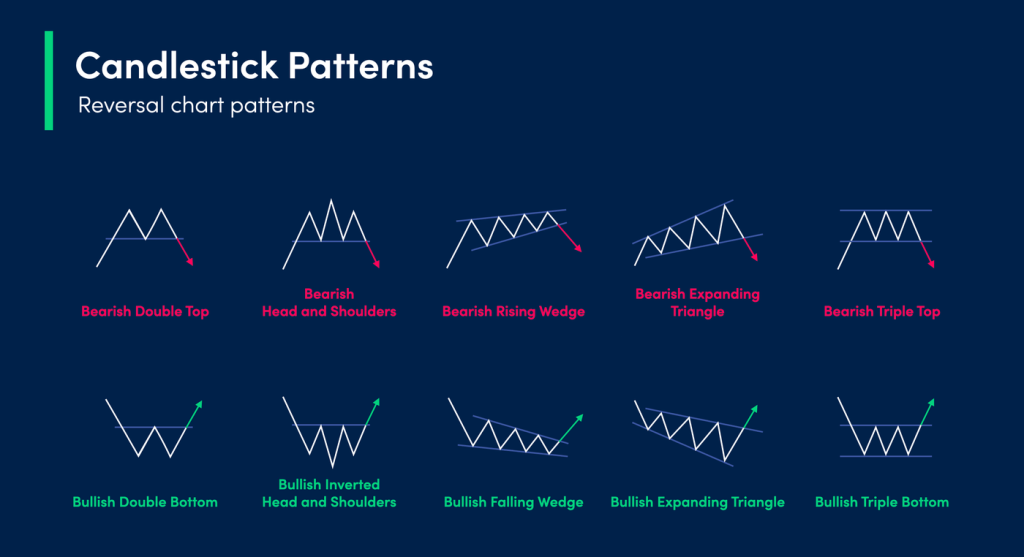
Risk Management 101: The 1% Rule Explained for Safer Trading

Imagine watching your portfolio swing wildly with every market move, your emotions tied directly to the charts. Now imagine having a simple rule that keeps you in the game, no matter what happens. That’s the power of proper risk management, and the 1% Rule is your first line of defense.
While no strategy guarantees profits, managing your risk is what separates traders who survive from those who get wiped out. Today, we’re breaking down one of the most fundamental principles in trading.
What is the 1% Rule?
The 1% Rule is a straightforward risk management guideline that limits your potential loss on any single trade to 1% of your total trading capital. It’s not about how much you can make, but how much you’re willing to lose.
Think of it as a seatbelt for your portfolio—you hope you never need it, but you’ll be glad it’s there when volatility hits.
How It Works: The Simple Math
The Calculation
Your risk per trade = Your total trading capital × 0.01
Example: If you have a $10,000 trading account:
– Your maximum risk per trade = $10,000 × 0.01 = $100
This means if a trade goes against you, you’ll exit before losing more than $100 on that specific position.
The Setup: Position Sizing
This is where the 1% Rule gets practical. You don’t just risk $100—you calculate your position size based on where you’ll exit if you’re wrong.
The Formula:
Position Size = (Risk per Trade) ÷ (Distance to Stop-Loss)
Let’s say you want to buy Bitcoin at $60,000 and place your stop-loss at $58,000:
– Risk per trade: $100
– Risk per unit: $60,000 – $58,000 = $2,000
– Position size: $100 ÷ $2,000 = 0.05 BTC
You’d buy 0.05 BTC, knowing that if price drops to $58,000, you’ll lose exactly $100 (1% of your capital).
Entry & Exit Rules
Before You Enter
1. Calculate your 1% risk amount based on current capital
2. Determine your stop-loss price before entering the trade
3. Calculate your position size using the formula above
4. Stick to your numbers—no emotional adjustments
When to Exit
– Stop-Loss Hit: Exit immediately at your predetermined price
– Profit Target Reached: Consider taking partial profits or moving your stop-loss to breakeven
– Rule Violation: If you can’t place a proper stop-loss that respects the 1% rule, skip the trade
Risk Management Pro Tip
The 1% Rule works even better when combined with correlation awareness. If all your trades are in similar assets (like multiple tech stocks or correlated cryptocurrencies), you might effectively be risking 3-4% even with individual 1% stops. Diversify across uncorrelated assets to truly manage your total risk.
Where to Practice This Strategy
Mastering risk management requires practice in real market conditions without real money on the line. You can practice this strategy on Binance using their demo or live markets. Their platform allows you to set stop-loss orders and calculate position sizes easily, making it ideal for implementing the 1% Rule consistently.
Conclusion
The 1% Rule isn’t about getting rich quick—it’s about staying in the game long enough to let your edge play out. By limiting each trade’s downside, you ensure that no single loss can significantly damage your portfolio. This creates psychological freedom to make clear-headed decisions and survive the inevitable losing streaks every trader faces.
Remember, trading is a marathon, not a sprint. The traders who last aren’t necessarily the ones with the best entries, but those with the best exits and risk management. Start implementing the 1% Rule today, and trade with confidence knowing you’ve built a foundation that can withstand market storms.
South Korea Proposes 5% Crypto Cap for Corporations
November 26, 2024 — South Korea’s Financial Services Commission (FSC) has drafted guidelines to limit corporate cryptocurrency holdings to 5% of equity capital. The rules, expected to be finalized by February, would restrict institutional investments to the top 20 digital assets by market cap. This regulatory move aims to control market volatility while cautiously opening the door for greater institutional participation in the crypto market.
Immediate Details & Direct Quotes
The draft framework from South Korea’s financial regulator introduces a significant new limit for companies and professional investors. Under the proposed guidelines, corporations would only be permitted to invest in cryptocurrencies ranked within the top 20 by market capitalization. A key point of ongoing debate is whether dollar-pegged stablecoins like Tether (USDT) will be included in this permissible list.
The FSC’s measures reflect a cautious approach to expanding institutional crypto access while safeguarding market stability amid growing corporate interest, according to analysts cited in the report. The finalized rules are anticipated between January and February, with corporate trading expected to begin later this year.
Market Context & Reaction
The proposed 5% cap is likely to channel significant liquidity toward major cryptocurrencies. Analysts note that this concentration will primarily benefit Bitcoin (BTC) and potentially Ethereum (ETH), with limited immediate impact on smaller altcoins. Observers suggest the limit may not pose a severe constraint initially, as most companies are unlikely to reach the 5% threshold in the early stages of adoption.
To manage the anticipated influx of institutional capital, the framework will also establish price limits and split trading rules designed to mitigate volatility. Market participants are closely monitoring the country’s upcoming Digital Asset Basic Act, expected in the first quarter, which will formalize regulations for won-pegged stablecoins.
Background & Historical Context
This regulatory development is part of South Korea’s broader effort to create a structured digital asset ecosystem. The forthcoming Digital Asset Basic Act is seen as pivotal for the local market structure, as it will not only set rules for stablecoins but also open the door to South Korea’s first spot crypto exchange-traded funds (ETFs).
The stablecoin regulations are viewed as particularly influential for South Korea’s broader crypto ecosystem. These steps represent a methodical approach by regulators to integrate digital assets into the traditional financial system while implementing guardrails to protect market integrity and investors.
What This Means
In the short term, the 5% cap and top-20 restriction will likely solidify Bitcoin and Ethereum’s dominance within South Korea’s institutional crypto landscape, concentrating trading volume and liquidity. The formalization of won-stablecoin rules and the introduction of spot crypto ETFs, expected under the Digital Asset Basic Act, could serve as major catalysts for local market maturation and adoption.
For investors and companies, this signals a more regulated but accessible environment for corporate crypto investment. The establishment of clear rules, including volatility controls, may encourage more traditional firms to cautiously enter the digital asset space. Market participants should monitor the final language regarding stablecoin inclusion and the specific implementation timeline for corporate trading, expected later this year.
Meta Description: South Korea’s FSC proposes a 5% crypto cap for corporations, restricting investments to top 20 coins. New rules aim to curb volatility as institutional participation grows.
Primary Keywords: South Korea, Crypto Regulation, Institutional Investment, Bitcoin, Stablecoin