
How to Spot a Honey Pot Scam: Safety Guide
Honey pot scams are one of the most deceptive traps in the crypto world. They lure investors with promises of easy profits, only to lock their funds away forever. This comprehensive guide will teach you how to identify and avoid honey pot scams, keeping your assets safe.
Key Concepts
- What is a Honey Pot Scam? A smart contract designed to appear legitimate but contains hidden code that prevents you from selling or withdrawing your tokens.
- Common Red Flags: Unusually high yields, anonymous developers, lack of liquidity locks, and complex tokenomics that favor the creator.
- How It Works: Scammers create a token, hype it on social media, and when investors buy in, the contract blocks sell orders or drains liquidity.
Pro Tips
- Always verify the contract source code on Etherscan or BscScan.
- Use tools like Honeypot.is or Token Sniffer to scan for malicious code.
- Check liquidity locks and ownership renouncement.
- Look for verified audits from reputable firms.
FAQ Section
What happens if I buy into a honey pot?
You will be unable to sell your tokens, and the scammer may drain liquidity, leaving you with worthless assets.
Can honey pot scams be avoided?
Yes, by using contract scanners, checking liquidity locks, and avoiding projects with anonymous teams or unrealistic promises.
Are honey pots illegal?
Yes, they are a form of fraud, but due to the pseudonymous nature of crypto, enforcement can be difficult.
Conclusion
Staying safe in crypto requires vigilance. By understanding honey pot scams and using the right tools, you can protect your investments. For more details on this, check out our guide on What Is Firedancer? A Beginner’s Guide to Solana’s New Validator Client. You might also be interested in reading about How to Trade the Gap Fill Strategy Like a Pro.
Carbon Credits: How Tokenization is Fixing the Market
The global carbon credit market, valued at over $2 billion in voluntary transactions alone, has long been plagued by opacity, double counting, and high transaction costs. Tokenization—the process of representing real-world assets on a blockchain—offers a structural fix. By moving carbon credits from fragmented, paper-based registries to transparent, programmable digital tokens, the market gains verifiable provenance, instant settlement, and fractional accessibility. This guide explains how tokenized carbon credits work, evaluates their investment potential, and provides actionable insights for both institutional and retail participants.
What Are Carbon Credits and Why Tokenize Them?
A carbon credit represents the right to emit one metric ton of carbon dioxide (or equivalent greenhouse gases). Off-chain, credits are issued by standards bodies (e.g., Verra, Gold Standard) and traded over-the-counter with limited price discovery. On-chain tokenization wraps each credit into a blockchain-based token—often an ERC-20 or similar standard—that can be traded 24/7 on decentralized exchanges or used as collateral in DeFi protocols. The key difference: off-chain credits rely on centralized registries and manual audits; on-chain credits embed verification data directly into the token, enabling real-time transparency and automated compliance.
How Tokenization Works: The Technical Process
The journey from a verified carbon project to a tradable token involves four critical steps:
- Project Verification: A carbon offset project (e.g., reforestation, renewable energy) is certified by a recognized standard like Verra’s VCS or Gold Standard. The project generates credits, each with a unique serial number.
- Special Purpose Vehicle (SPV): An SPV is created to legally hold the off-chain credits. This entity ensures that the underlying asset is ring-fenced and compliant with local regulations.
- Tokenization via Oracle: A trusted oracle (e.g., Chainlink or a dedicated carbon oracle) bridges the off-chain registry data to the blockchain. The oracle mints tokens that represent a specific number of credits, recording metadata such as vintage, project type, and certification body.
- On-Chain Trading: The tokenized credits are listed on secondary markets. Smart contracts govern retirement (permanent removal from circulation), preventing double spending. Each transaction is immutable and publicly auditable.
Investment Analysis: Pros, Cons, and Risks
Tokenized carbon credits offer a new asset class with distinct advantages and challenges. For a broader market view, check out our analysis on Security Tokens vs Utility Tokens: RWA Guide 2026.
Pros
- Liquidity: Fractional ownership allows small investors to buy portions of a credit, while 24/7 markets reduce the bid-ask spread typical of OTC trading.
- Transparency: Every credit’s lifecycle—from issuance to retirement—is recorded on-chain, reducing fraud and double counting.
- Programmability: Smart contracts can automate retirement upon sale, ensuring credits are not reused. This is a major upgrade over manual registry updates.
Cons and Risks
- Regulatory Uncertainty: Carbon credits are not universally classified as securities or commodities. Jurisdictions like the EU and US are still developing frameworks. Tokenized versions may face additional scrutiny under securities laws.
- Smart Contract Risk: Bugs in token contracts or oracle failures could lead to loss of funds or incorrect credit representation. Audited protocols reduce but do not eliminate this risk.
- Quality Variance: Not all carbon credits are equal. Some projects have been criticized for overestimating emission reductions. Tokenization does not solve the underlying quality issue—it only improves transparency.
Investors often compare this to How to Secure Your Crypto Wallet: A Step-by-Step Guide, as both require careful custody and verification practices.
Where to Trade Tokenized Carbon Credits
Several platforms now list tokenized carbon credits, including dedicated carbon exchanges and major cryptocurrency exchanges. For retail investors seeking low fees and high liquidity, MEXC offers a range of RWA tokens, including carbon credit projects. Low fees are crucial for this strategy. We recommend MEXC. Visit their platform to explore available pairs and start trading with competitive maker-taker rates. https://promote.mexc.co/a/PefPNW2g
Frequently Asked Questions
Are tokenized carbon credits legally recognized?
How do I verify the quality of a tokenized carbon credit?
Can I retire a tokenized carbon credit to offset my emissions?
Conclusion
Tokenization is not a cure-all for the carbon market’s structural flaws, but it is a powerful tool for increasing transparency, liquidity, and accessibility. Investors should approach with due diligence—focusing on audited protocols, high-quality underlying projects, and evolving regulations. As the market matures, tokenized carbon credits could become a cornerstone of both climate finance and diversified RWA portfolios. For those ready to participate, start with a regulated exchange that prioritizes low fees and robust security.
CLARITY Act Faces Senate Deadline as Midterm Elections Approach
June 26, 2026 — Senate leaders are under pressure to schedule a vote on the CLARITY Act before the midterm election calendar eliminates the window for bipartisan crypto legislation. Advocacy group Stand With Crypto warns that delaying the vote could waste months of compromise and progress on federal digital asset rules.
Immediate Details & Direct Quotes
Want to trade this news? Bitget offers professional charting tools and deep liquidity.
The Digital Asset Market Clarity Act awaits potential Senate floor action as lawmakers weigh when to bring the bill forward. Mason Lynaugh, executive director of Stand With Crypto, called on Senate leaders on June 25 to move the legislation, stating it would establish long-awaited federal guidelines for the digital asset sector.
“Crypto users, developers, and companies have continued to operate without a clear federal framework, creating ongoing uncertainty across the industry,” Lynaugh said. He emphasized the urgency: “There’s a limited window to get this done, with few remaining days left in the current Congress before the midterm elections. If Senate leaders don’t schedule a CLARITY Act vote in the coming weeks, an enormous amount of bipartisan work, compromise, and progress, could be wasted.”
The 2026 U.S. midterm general election is scheduled for November 3. The Senate’s tentative calendar includes extended state work periods in late summer and from October 5 through November 6, leaving limited legislative days before Election Day.
Market Context & Reaction
Stand With Crypto represents more than one million members and supporters, with hundreds of local chapters across the United States. The organization advocates for policies supporting digital asset adoption and oversight.
Polling cited by the group indicates significant voter interest in crypto regulation. Nearly three-quarters of crypto owners surveyed in Senate battleground states said they are more likely to support candidates who favor clearer cryptocurrency rules. A similar share reported closely following digital asset policy developments.
The CLARITY Act aims to strengthen consumer protections while providing developers and fintech firms clearer guidelines for creating products in the United States. Lynaugh wrote that the bill could address long-standing uncertainty surrounding digital asset regulation.
Background & Historical Context
The legislation follows months of bipartisan discussions focused on building a regulatory structure for digital asset markets. Federal rules for the sector remain incomplete, creating ongoing challenges for crypto users, developers, and companies operating without clear federal frameworks.
Stand With Crypto’s research shows digital assets are becoming part of everyday financial use. More than one-third of surveyed owners use crypto for personal transfers, while 21% report using digital assets to cover monthly expenses such as housing and utilities. Twenty percent of respondents use crypto to purchase household items like groceries.
Political alignment among crypto owners remains varied. Fifty-nine percent said they do not consistently support one political party. Nearly half indicated they could back candidates who share their views on crypto policy, even if they differ on other issues.
What This Means
The Senate has not yet scheduled a vote on the CLARITY Act. Lynaugh urged congressional leaders to move the legislation forward before the legislative calendar becomes further constrained. He noted that months of bipartisan work have positioned the bill for consideration.
If lawmakers fail to act before the midterm election period, the bill could face significant delays or require restarting negotiations in the next Congress. The legislation represents one of the most substantial bipartisan efforts to establish federal digital asset rules, and its future remains uncertain pending Senate leadership decisions.
More than 70,000 U.S. law enforcement professionals have also urged federal officials to revise provisions of the CLARITY Act, warning about potential implications of the current language.
The Rise of AI Agents in Crypto: A Complete Guide
Introduction
Artificial intelligence is reshaping the cryptocurrency landscape. From automated trading bots to intelligent portfolio managers, AI agents are becoming essential tools for traders and investors. This guide explores how AI agents work in crypto, their benefits, risks, and how you can leverage them for smarter decision-making.
Key Concepts
- AI Agent: A software program that uses machine learning to analyze data, make predictions, and execute actions autonomously.
- Automated Trading: AI agents can execute trades based on predefined strategies, market signals, or real-time sentiment analysis.
- Sentiment Analysis: AI scans social media, news, and forums to gauge market mood and predict price movements.
- Risk Management: AI agents can dynamically adjust stop-losses, position sizes, and portfolio allocations to minimize losses.
- DeFi Integration: AI agents interact with decentralized finance protocols for yield farming, lending, and arbitrage.
Pro Tips
- Start Small: Test AI agents with minimal capital before scaling up.
- Monitor Performance: Regularly review agent decisions and adjust parameters.
- Diversify Strategies: Use multiple agents with different approaches to spread risk.
- Security First: Only use reputable agents with audited code and never share private keys.
- Stay Updated: AI models need retraining as market conditions change.
FAQ Section
What is an AI agent in crypto?
An AI agent is an autonomous software program that uses machine learning to analyze crypto market data and execute trades or manage portfolios without human intervention.
Are AI agents safe to use?
Safety depends on the agent’s code quality, security audits, and your own practices. Always use agents from trusted sources and never grant unnecessary permissions.
Can AI agents guarantee profits?
No. AI agents can improve decision-making but cannot eliminate market risk. They are tools, not magic solutions.
Do I need coding skills to use an AI agent?
Many platforms offer no-code AI agents with drag-and-drop interfaces. However, customizing advanced strategies may require programming knowledge.
How much does an AI agent cost?
Costs vary from free open-source agents to subscription-based services charging a percentage of profits or a monthly fee.
Conclusion
AI agents are revolutionizing crypto trading by automating analysis, execution, and risk management. While they offer powerful advantages, they are not a substitute for due diligence. Start small, monitor performance, and choose platforms with low fees like MEXC to maximize returns. For more details on this, check out our guide on Tax Loss Harvesting in Crypto: A Guide for Traders. You might also be interested in reading about Order Blocks and Fair Value Gaps: The Smart Money’s Secret to Precision Entries.
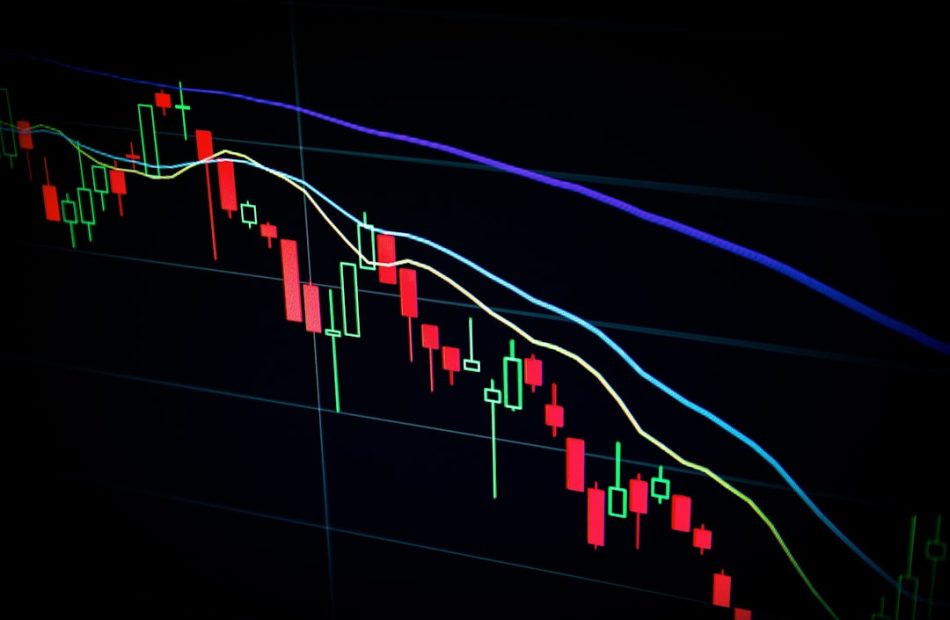
The Revenge Trade Trap: How to Stop Letting Losses Control Your Portfolio
You just took a bad loss. Maybe you ignored your stop-loss, or the market faked you out. Your heart is pounding, your screen is glowing, and all you want to do is ‘get it back’ right now. That urge? That’s revenge trading, and it’s one of the fastest ways to blow up an account. Let’s break down why it happens and, more importantly, how to stop it.
What Is Revenge Trading?
Revenge trading is when you enter a trade not because of a solid setup, but because you’re angry or frustrated from a previous loss. You’re trying to “punish” the market or make back what you lost in one quick move. It’s emotional, impulsive, and almost always ends badly.
How It Works
The cycle usually goes like this:
Looking for altcoin opportunities and smooth trading? Try KuCoin.
1. You lose money on a trade (often because of a mistake).
2. You feel upset, anxious, or angry.
3. You immediately open a new position, often larger or riskier than normal, without a clear plan.

4. The market moves against you again, deepening the loss.
5. The cycle repeats until you either stop or run out of capital.
The Setup (How to Spot It Coming)
Revenge trading doesn’t appear out of nowhere. Watch for these warning signs:
- You’re checking charts while still feeling emotional from a loss.
- You’re increasing position size to “win back” money faster.
- You’re entering trades without a stop-loss or take-profit.
- You feel a sense of urgency, like you must trade right now.
How to Break the Cycle
1. Step Away – After a loss, close your trading platform. Walk away for at least 30 minutes. Go outside, drink water, or do something unrelated.
2. Review Your Journal – Write down what went wrong. Was it your setup? Your risk? Your emotions? Seeing it on paper reduces the emotional charge.
3. Lower Your Risk – If you must trade, reduce your position size to 25% of normal. This keeps you in the game without letting emotions blow up your account.
4. Set a Daily Loss Limit – Decide before the session starts how much you’re willing to lose. Once you hit that number, you’re done for the day. No exceptions.
Risk Management for Your Mind
Risk management isn’t just about stop-losses and position sizing. It’s also about managing your mental state. Create a pre-trade checklist:
- Am I calm?
- Does this trade fit my strategy?
- Is my stop-loss in place?
- Am I trading to make money, or to get revenge?
If the answer to the last question is “revenge,” close the screen. That’s your most powerful risk management tool.
Final Thoughts
Revenge trading is a trap that catches every trader at some point. The difference between success and failure isn’t avoiding losses—it’s how you respond to them. Build habits that protect your capital and your mind. The market will always be there tomorrow. Make sure your account is too.
OpenAI’s GPT-5.6 Models Sol, Terra, Luna: A Crypto Name Game Explained
Did you know that two of the most recognizable names in crypto—Solana and Terra—just got borrowed by the world’s leading AI company? When OpenAI announced its latest GPT-5.6 models with the names Sol, Terra, and Luna, crypto users immediately took notice. While the company insists the names simply denote technical capabilities, the coincidence was impossible for the crypto community to ignore. For anyone following digital assets, understanding why these names matter—and why they don’t—is essential for separating market noise from genuine news. This guide explains what OpenAI actually announced, why crypto users reacted strongly, and what this tells us about the growing intersection between artificial intelligence and blockchain technology.
Read time: 8-10 minutes
Understanding OpenAI’s GPT-5.6 Model Naming for Beginners
Model naming in AI products is the practice of assigning distinct identifiers to different versions of artificial intelligence software, helping users understand which variant suits their needs. Think of it like car model names—a “Sports” trim versus an “Eco” trim tells you something about the vehicle’s capabilities without needing to read the engine specs.
Why does this matter for crypto users? Because project names in both AI and crypto serve as powerful branding tools that shape public perception. OpenAI chose “Sol,” “Terra,” and “Luna” to describe three tiers of its latest GPT-5.6 model family. Sol is the flagship model with advanced reasoning capabilities, Terra is a balanced option for everyday tasks, and Luna is the fast, lower-cost entry point.
A real-world crypto parallel: when a blockchain project launches tokens named after physical assets (like “Gold” or “Silver”), it creates instant associations that influence how people perceive the project’s value, whether intended or not.
The Technical Details: How OpenAI’s Model Lineup Actually Works
OpenAI’s GPT-5.6 family represents a spectrum of capabilities designed for different use cases. Here’s what each model brings:
1. Sol (Flagship Model): The most powerful option, introducing new “max” and “ultra” modes for advanced reasoning and agent-based workflows. It handles complex tasks requiring extended processing, such as multi-step research or sophisticated coding projects.
2. Terra (Balanced Model): Positioned as a middle-ground option optimized for everyday tasks. It offers strong performance without the computational overhead of Sol, making it suitable for routine queries and content generation.
3. Luna (Fast/Entry Model): The most efficient and affordable option, designed for quick responses and simpler tasks. It serves as the budget-friendly entry point into the GPT-5.6 ecosystem.
These three models sit between OpenAI’s high-end GPT-5.5 offering and its more affordable options. The entire GPT-5.6 family delivers enhanced capabilities in coding, scientific research, and cybersecurity compared to earlier versions.
Flow diagram of OpenAI’s model hierarchy: A visual showing Sol at top (advanced reasoning), Terra in middle (balanced), Luna at base (fast and affordable), with arrows indicating decreasing complexity and cost.
Current Market Context: Why This Matters Now
As of mid-2026, the intersection of AI and crypto continues to generate significant market attention. OpenAI’s model naming announcement triggered immediate discussion across crypto-focused social media platforms, reviving memories of two major blockchain projects.
The name “Sol” closely resembles Solana’s native token ticker (SOL), one of the largest cryptocurrencies by market capitalization. Meanwhile, “Terra” and “Luna” directly echo the Terra blockchain ecosystem, whose algorithmic stablecoin collapse in 2022 erased tens of billions in market value and remains one of the industry’s most discussed failures.
Importantly, OpenAI explicitly stated the names were chosen solely to indicate model capabilities and have no connection to cryptocurrency projects. The company said Sol, Terra, and Luna represent different capability levels within the GPT-5.6 series—not endorsements or partnerships.
This announcement comes shortly after OpenAI introduced “Jalapeño,” its first custom-built AI chip developed with Broadcom. That processor was built in nine months and is designed for inference workloads powering ChatGPT, Codex, and future AI agents. OpenAI’s hardware development signals growing independence and flexibility as AI computing demand increases.
Competitive Landscape: How OpenAI’s Announcement Compares
The naming controversy highlights broader trends at the intersection of tech and crypto:
| Feature | OpenAI’s Model Naming | Crypto Project Branding | Public Reaction |
|---|---|---|---|
| Intent | Technical capability description | Brand identity and community building | Mixed—some see coincidence, others strategic |
| Brand Recognition | Leverages familiar terms (Sol, Terra, Luna) | Builds unique identity from scratch | Creates instant associations, both positive and negative |
| Risk of Confusion | Low—different industry entirely | High—competing projects use similar names | Crypto users more sensitive due to past collapses |
| Outcome | Likely short-term discussion, no lasting impact | Long-term brand equity or liability | Reminder of crypto’s mainstream awareness |
Why this matters for users: The naming coincidence doesn’t change either OpenAI’s technology or crypto fundamentals. However, it demonstrates how deeply crypto terminology has penetrated mainstream tech culture.
Practical Applications: Real-World Use Cases
What can you actually learn from this news?
- Distinguishing Signal from Noise: Not every coincidence is a market signal. OpenAI’s model names don’t indicate any crypto partnership or endorsement.
- Understanding Market Psychology: The strong reaction shows how past events (like Terra’s collapse) shape current market sentiment. Traders remain sensitive to any mention of failed projects.
- Tracking AI-Crypto Convergence: While this specific announcement lacks crypto relevance, the broader trend of AI companies developing custom hardware (like OpenAI’s Jalapeño chip) could eventually impact crypto mining or blockchain AI applications.
Risk Analysis: Expert Perspective
Primary Risks:
1. Misinterpretation Risk: Users might mistakenly believe OpenAI’s naming indicates endorsement of or partnership with Solana or Terra projects. OpenAI explicitly denies this.
2. FUD Amplification: Bad actors could spread misinformation suggesting OpenAI’s involvement with Terra resurrecting interest in the failed project.
3. Market Noise: The naming controversy distracts from understanding what GPT-5.6 actually offers—genuine improvements in coding, research, and cybersecurity capabilities.
Mitigation Strategies:
- Always verify partnerships through official channels, not social media speculation
- Focus on technology fundamentals rather than naming coincidences
- Check multiple sources before acting on any news that seems too aligned with market narratives
Expert Consensus: This is a coincidence, not a signal. OpenAI chose names that sound familiar and are easy to remember—a common marketing practice. The crypto community’s strong reaction reflects lingering trauma from the Terra collapse and general sensitivity to brand overlap.
Future Outlook: What’s Next
The GPT-5.6 rollout remains limited while safety testing continues. OpenAI noted that Sol’s new reasoning modes are designed for complex tasks requiring extended processing, suggesting future applications in research and development.
Reports indicate the White House asked OpenAI to limit the initial rollout of GPT-5.6, though the company didn’t link its limited preview to any government request. Broader public release will follow additional safety testing.
In a separate development, Amazon withdrew from distributing “Artificial,” a film centered on OpenAI CEO Sam Altman that also features Elon Musk. Amazon continues discussions with filmmakers about finding another distributor, while simultaneously expanding its commercial relationship with OpenAI through a multi-billion-dollar investment.
For crypto markets, the naming discussion will likely fade as users focus on whether GPT-5.6’s capabilities represent meaningful AI advancement. The key takeaway: not every crypto-adjacent name carries crypto implications.
Key Takeaways
- OpenAI’s model names (Sol, Terra, Luna) are coincidental and explicitly unrelated to cryptocurrency projects, despite triggering strong community reactions.
- The naming highlights crypto’s mainstream cultural penetration—even AI companies use terms familiar from blockchain.
- Always verify partnerships through official channels rather than assuming connections based on name similarity.
- Focus on technology fundamentals over naming speculation to make informed decisions about both AI and crypto developments.
How to Read a Smart Contract Audit Report: A Comprehensive Guide for Crypto Investors
Smart contract audits are essential for verifying the security and reliability of decentralized applications (dApps) and blockchain protocols. However, audit reports can be dense and technical, making it challenging for non-developers to interpret them. This guide will break down the key components of a smart contract audit report, explain how to identify critical issues, and provide actionable tips for making informed investment decisions.
Key Concepts
1. What Is a Smart Contract Audit?
A smart contract audit is a systematic review of a blockchain project’s code by a third-party security firm. The goal is to identify vulnerabilities, logical errors, and inefficiencies that could lead to financial loss or exploitation. Audits typically include manual code review, automated testing, and simulation of attack scenarios.
2. Common Sections in an Audit Report
- Executive Summary: A high-level overview of the audit findings, including the overall risk rating (e.g., Low, Medium, High, Critical).
- Scope: Lists the specific contracts, files, and functions that were reviewed.
- Methodology: Describes the tools and techniques used (e.g., Slither, MythX, manual review).
- Findings: Detailed descriptions of each vulnerability, categorized by severity. Each finding includes a title, description, impact, and recommended fix.
- Remediation Status: Indicates whether the project team has addressed the issues (e.g., Fixed, Acknowledged, Partially Fixed).
- Disclaimer: States that the audit is not a guarantee of security and that residual risks may remain.
3. Severity Levels Explained
Most audit firms use a standard severity scale:
- Critical: Vulnerabilities that can lead to loss of funds or permanent contract failure. These must be fixed before deployment.
- High: Issues that could cause significant financial damage or disrupt core functionality.
- Medium: Problems that may affect performance or user experience but are not immediately exploitable.
- Low: Minor issues like code style violations or informational warnings.
- Informational: Suggestions for improvement that do not pose security risks.
Pro Tips
- Always check the audit date: Code can change after an audit. Look for the latest report and verify that all critical findings have been resolved.
- Cross-reference multiple audits: Reputable projects often commission audits from two or more firms. Compare findings to get a fuller picture.
- Look for the “Remediation” section: A report that lists “Fixed” for all critical and high issues is a good sign. “Acknowledged” without a fix may indicate the team is ignoring risks.
- Understand the scope: If the audit only covered a small portion of the codebase, other parts may still be vulnerable.
- Don’t rely solely on audits: Audits are a snapshot in time. Combine them with bug bounty programs, formal verification, and ongoing monitoring.
💡 Pro Tip
Looking for altcoin opportunities and smooth trading? Try KuCoin.
FAQ Section
Q1: Can I trust a project that has an audit report?
An audit is a positive signal, but it is not a guarantee of safety. Always consider the reputation of the audit firm, the recency of the report, and whether the findings have been resolved. For more details on this, check out our guide on Bitcoin Slides as Coinbase Premium Index Hits Monthly Low.
Q2: What should I do if a project has no audit?
Proceed with extreme caution. Unaudited smart contracts are high-risk investments. Look for projects that prioritize security and have at least one audit from a well-known firm.
Q3: How do I verify that an audit report is authentic?
Check the audit firm’s official website or social media for the report. Scammers sometimes fake audit reports. You might also be interested in reading about Bitcoin Layer 2s: Stacks, Lightning, and Runes Guide – Scaling Bitcoin for DeFi & Payments.
Q4: What is the difference between a security audit and a code review?
A security audit focuses on vulnerabilities and exploits, while a code review is a broader assessment of code quality, efficiency, and best practices. Many audit reports combine both.
Conclusion
Reading a smart contract audit report is a critical skill for anyone involved in DeFi, NFTs, or blockchain investing. By understanding the structure, severity levels, and remediation status, you can better assess the risk of a project before committing capital. Remember that audits are just one piece of the security puzzle—always do your own research (DYOR) and diversify your investments. Stay safe and informed!
Former Ethereum Foundation Leader Warns of Funding Gap as EF Steps Back
June 26, 2026 — A former Ethereum Foundation (EF) member is warning that the network faces a critical funding gap as the organization intentionally reduces its central role. Trent Van Epps, who left the EF after it accelerated its “subtraction” philosophy, told CoinDesk that the Ethereum ecosystem must quickly build new funding institutions to support core development, which requires roughly $30 million annually.
Immediate Details & Direct Quotes
Looking for altcoin opportunities and smooth trading? Try KuCoin.
Van Epps said he departed the Ethereum Foundation after it became clear the organization would push authority and legitimacy into the broader ecosystem rather than consolidating power. He described the EF as intentionally reducing its central role, arguing that multiple independent institutions should eventually coordinate the ecosystem.
“Ethereum faces a practical funding challenge rather than an existential crisis,” Van Epps said during an interview with CoinDesk’s Jennifer Sanasie on Markets Outlook. He estimated that core protocol development requires approximately $30 million annually, even as the Ethereum Foundation’s treasury gradually declines over time.
Van Epps noted that the issue is not shrinking technical needs but identifying new organizations willing to finance public goods that keep the network reliable and secure. His Protocol Guild initiative has distributed nearly $40 million to Ethereum core developers over roughly four years, but he said that is not sufficient on its own to replace broader ecosystem funding.
The warnings come after recent Ethereum Foundation leadership changes and workforce reductions, which have fueled questions about Ethereum’s future governance.
Market Context & Reaction
Van Epps remains bullish on Ethereum despite the funding concerns. He argued that Ethereum continues to lead in decentralized finance (DeFi), stablecoin settlement, and Ethereum Virtual Machine (EVM) adoption, saying those network effects remain difficult for competitors to match.
While acknowledging near-term coordination challenges, Van Epps said he is optimistic that new institutions and major stakeholders will emerge to help finance Ethereum’s shared infrastructure. He pointed to the “free rider” problem as a key obstacle to solving the funding gap, where firms benefit from shared infrastructure without contributing to its maintenance.
As of June 26, 2026, the Ethereum ecosystem is navigating this transition with the EF stepping back from its historically central role. Market reaction to the funding gap warning has been muted, with traders assessing whether new institutions will step in to fill the void.
Background & Historical Context
The Ethereum Foundation has long served as the primary steward of the Ethereum network, funding core development, research, and ecosystem grants. However, in recent years, the organization has pursued a deliberate strategy of “subtraction”—gradually reducing its influence and pushing authority to independent entities across the ecosystem.
This governance shift has accelerated with recent leadership changes and workforce reductions at the EF, raising questions about how the network will maintain its critical infrastructure without a central funding body. The Protocol Guild, which Van Epps helped establish, was designed to address this transition by directly funding core developers through a decentralized model.
Van Epps outlined a vision where the EF continues operating in a narrower role alongside newer organizations focused on research, commercialization, and ecosystem growth. He argued Ethereum also needs stronger advocacy around ETH as an asset and a clearer narrative connecting the token to the network’s expanding on-chain economy.
What This Means
Van Epps believes Ethereum’s governance will become more distributed over the next decade, with success measured by broad adoption. He expects billions of users will ultimately access Ethereum and its Layer 2 ecosystem.
In the short term, the Ethereum ecosystem faces a coordination challenge: new funding institutions must emerge to replace the EF’s declining treasury. Major stakeholders, including DeFi protocols, Layer 2 networks, and institutional holders, may need to contribute to shared infrastructure.
Long term, the transition could strengthen Ethereum’s decentralization thesis if multiple independent institutions successfully coordinate funding. However, the free rider problem remains a significant obstacle, as firms that benefit from Ethereum’s infrastructure may resist contributing.
For investors and developers, the key question is whether new funding mechanisms will emerge quickly enough to maintain core development without interruption. The next 12-18 months will be critical as the ecosystem tests whether decentralized governance can effectively fund public goods.
—

Mastering Supply and Demand Zones: The Trader’s Blueprint for High-Probability Entries
Have you ever watched a price chart and wondered why it seems to bounce off certain invisible lines like clockwork? Those aren’t just random levels—they’re supply and demand zones, and they form the backbone of some of the most consistent trading strategies in the crypto market. Forget complicated indicators; these zones reveal the raw battle between buyers and sellers, giving you a clear edge in your trades.
How It Works
Supply and demand zones are areas on the chart where price has historically shown a strong reaction. A supply zone is where selling pressure overwhelms buyers, causing price to drop. A demand zone is where buying pressure dominates, pushing price higher. These zones form because of institutional order flow—large players leave footprints when they accumulate or distribute assets.
Think of it like this: when a big buyer steps in, they create a demand zone (a price level where they bought heavily). Later, when price returns to that zone, that same buyer might defend it, or new buyers see it as a bargain. Similarly, supply zones act as resistance because sellers remember the pain of buying high and want to exit there.
The Setup
To trade supply and demand zones effectively, follow these steps:
1. Identify a strong move: Look for a sharp, impulsive price move (a “drop” or “rally”) that leaves a clear base. The zone is the area just before that impulsive move started.

2. Mark the zone: Draw a horizontal rectangle covering the consolidation area (the “base”) where price stalled before the big move. For a demand zone, this is the bottom of the drop; for a supply zone, it’s the top of the rally.
3. Wait for a retest: Patience is key. Let price return to the zone. If it touches the zone and shows a reversal candlestick (like a hammer or a shooting star), that’s your signal.
4. Enter the trade: For a demand zone, buy when price touches the zone and bounces. For a supply zone, sell (or short) when price touches and rejects.
5. Set your stop-loss: Place your stop just below the demand zone (for buys) or just above the supply zone (for sells). This protects you if the zone breaks.
Here’s a pro tip: The stronger the initial impulsive move, the more reliable the zone. A zone formed on a 1-hour chart is more significant than one on a 5-minute chart. For crypto, focus on higher timeframes (4H or daily) for zones that hold for days or weeks.
Risk Management
No strategy works 100% of the time, and supply/demand zones are no exception. Here’s how to protect your capital:
- Always use a stop-loss: Never enter a zone trade without one. The zone is your edge, but if it breaks, you need to exit quickly.
- Position size wisely: Risk no more than 1-2% of your account per trade. If your stop is wide (e.g., 5% away), reduce your position size accordingly.
- Watch for false breaks: Sometimes price dips slightly into a demand zone and then reverses. Other times, it slices through and continues. Wait for a confirmed reversal candle (like a bullish engulfing or a long wick) before entering.
- Don’t chase: If price moves away from the zone without a retest, let it go. FOMO leads to losses. There’s always another trade.
- Combine with volume: If you can, check volume. A zone with high volume during the initial move is more likely to hold. Low volume zones are weaker.
Conclusion
Supply and demand zones are a simple yet powerful tool that puts you in sync with the smart money. By focusing on areas where institutions have placed large orders, you can trade with the flow rather than against it. Start by practicing on a demo chart—mark zones on Bitcoin or Ethereum and watch how price reacts. Over time, you’ll develop an intuition for which zones are worth trading. Remember, consistency comes from patience and discipline, not from chasing every move. Master these zones, and you’ll see the market in a whole new light.
BlackRock BUIDL: Institutional Crypto Entry Guide
BlackRock’s BUIDL fund marks a pivotal moment for Real World Assets (RWAs) in crypto. This guide explains how institutional money is entering the tokenized economy, the mechanics behind it, and what it means for investors.
What Is BlackRock BUIDL and Why Does It Matter?
BUIDL (BlackRock USD Institutional Digital Liquidity Fund) is a tokenized money market fund launched on the Ethereum blockchain. It represents a bridge between traditional finance (TradFi) and decentralized finance (DeFi). Unlike off-chain assets that trade only during market hours and require intermediaries, on-chain tokenization enables 24/7 liquidity, fractional ownership, and programmable transparency. BlackRock’s entry signals that RWAs—such as Treasury bills, bonds, and credit—are now a legitimate institutional asset class.
How BUIDL Works: The Technical Process
The tokenization of real-world assets follows a structured process:
- Asset Selection: BlackRock selects short-term U.S. Treasury bills and cash equivalents as underlying collateral.
- Special Purpose Vehicle (SPV): A legal SPV holds the off-chain assets, isolating them from bankruptcy risk.
- Tokenization: The SPV issues ERC-20 tokens (BUIDL) on Ethereum, each representing a proportional claim on the underlying fund.
- Oracle Integration: Price oracles (e.g., Chainlink) feed real-time net asset value (NAV) data on-chain to ensure transparency.
- Blockchain Settlement: Investors can buy, sell, or transfer BUIDL tokens 24/7 on supported exchanges and DeFi protocols.
Investment Analysis: Pros, Cons, and Risks
Pros
- Institutional-Grade Yield: BUIDL targets yields from short-term Treasuries, currently competitive with high-yield savings accounts.
- 24/7 Liquidity: Tokenized shares can be traded any time, unlike traditional money market funds.
- Transparency: On-chain data allows real-time verification of holdings and NAV.
- Fractional Ownership: Low minimum investment opens access to institutional-grade assets.
Cons
- Regulatory Uncertainty: Tokenized securities face evolving SEC and global regulations.
- Smart Contract Risk: Bugs or exploits in the token contract could lead to loss of funds.
- Counterparty Risk: The SPV and custodian (e.g., BNY Mellon) must remain solvent.
Risks
- Market Risk: Treasury yields can fluctuate, affecting returns.
- Oracle Risk: Incorrect NAV feeds could lead to mispricing.
- Liquidity Risk: In stressed markets, secondary trading may dry up.
For a broader market view, check out our analysis on The Magic of Support and Resistance Flips: How Old Walls Become New Floors. Investors often compare this to Master the 1% Rule: The Golden Rule of Trading Risk Management.
Tool Recommendation: Where to Trade BUIDL Tokens
To trade tokenized RWAs like BUIDL efficiently, choose an exchange with low fees and high liquidity. Low fees are crucial for this strategy. We recommend MEXC. Start trading on MEXC.
Frequently Asked Questions
What is the minimum investment for BlackRock BUIDL?
The minimum investment is typically $100,000 for accredited investors, though secondary market purchases on exchanges may have lower thresholds.
Is BUIDL available to retail investors?
Currently, BUIDL is limited to accredited investors. However, retail investors can gain exposure through DeFi protocols that integrate BUIDL as collateral or yield-bearing assets.
How does BUIDL generate yield?
BUIDL invests in short-term U.S. Treasury bills and cash equivalents. The yield is distributed to token holders proportionally, typically via a daily rebasing mechanism.
Conclusion: Final Verdict on BlackRock BUIDL
BlackRock BUIDL represents a watershed moment for RWAs in crypto. It offers institutional-grade yield with blockchain efficiency, but investors must weigh regulatory and smart contract risks. As the first major money market fund on-chain, it sets a precedent for future tokenized assets. For those seeking exposure, low-fee platforms like MEXC provide a practical entry point.