
How to Spot a Honey Pot Scam: Safety Guide for Crypto Investors
Honey pot scams are one of the most deceptive traps in decentralized finance (DeFi). In this comprehensive guide, we explain what a honey pot is, how it works, and how you can protect yourself from losing funds.
Key Concepts
- Honey Pot Definition: A smart contract that appears to allow anyone to withdraw tokens, but contains hidden code that prevents real withdrawals while trapping your deposited funds.
- How It Works: Scammers create a token with a hidden blacklist or transfer restriction. When you try to sell, the transaction fails, and your tokens remain locked.
- Common Signs: Unusually high buy taxes, no sell function, hidden owner privileges, and anonymous or fake team members.
Pro Tips
- Always verify the contract source code on Etherscan or BscScan before interacting.
- Use tools like Honeypot.is or Token Sniffer to scan the contract for malicious functions.
- Start with a tiny test transaction to check if you can sell back.
- Never invest in tokens with anonymous teams or no clear roadmap.
FAQ Section
What is a honey pot scam in crypto?
A honey pot scam is a malicious smart contract that tricks users into depositing funds by promising easy profits, but prevents them from withdrawing.
How can I detect a honey pot token?
Check the contract for hidden blacklist functions, high sell taxes, or owner-only transfer capabilities. Use scanners like Honeypot.is.
Can I recover funds from a honey pot?
Usually not. Once funds are trapped, the scammer controls the contract. Prevention is the only effective defense.
For more details on this, check out our guide on How to Participate in Governance Proposals (DAOs): A Complete Guide for Crypto Investors.
You might also be interested in reading about Security Tokens vs Utility Tokens: The Complete RWA Guide.
Conclusion
Honey pot scams are dangerous but avoidable with proper due diligence. Always audit smart contracts, use trusted tools, and never invest more than you can afford to lose. Stay safe and trade smart.
Bitcoin Price Forecast 2025: Understanding CZ’s $1 Million Prediction Explained
Did you know that less than 1% of the global population currently owns Bitcoin? This surprising statistic forms the foundation of Binance founder Changpeng Zhao’s (CZ) bold prediction that Bitcoin could reach $1 million per coin over the next decade. While U.S. spot Bitcoin ETFs recently recorded $222.64 million in outflows, CZ remains focused on the bigger picture: adoption. For crypto learners in 2025, understanding why someone with CZ’s experience would make such a forecast—and what it means for your own investment strategy—requires separating long-term adoption trends from short-term market movements. This guide breaks down CZ’s reasoning, explains the adoption math behind his prediction, and shows you how to evaluate Bitcoin price forecasts without getting caught in hype.
Read time: 10-12 minutes
Understanding Bitcoin Price Predictions for Beginners
Bitcoin price predictions are estimates of where the cryptocurrency’s value might go in the future, based on various factors like adoption rates, market cycles, and global economic conditions. Think of it like predicting how many people will use email by 2030—it’s not about guessing a specific number, but understanding the growth trajectory of a technology that’s still in early adoption.
Why do people make Bitcoin predictions? They help investors plan for long-term strategies and understand potential outcomes. However, it’s crucial to know that all predictions involve uncertainty. CZ’s forecast isn’t a guaranteed outcome; it’s an “if-then” scenario: IF adoption continues growing, THEN Bitcoin’s value could multiply significantly.
A real-world crypto example is comparing Bitcoin adoption to internet adoption in the late 1990s. In 1995, less than 1% of the world used the internet. By 2010, that number had grown to over 25%. Bitcoin’s adoption curve might follow a similar pattern, which is the core of CZ’s argument.
The Technical Details: How Adoption Drives Bitcoin’s Value
Bitcoin’s price isn’t random—it’s influenced by supply and demand mechanics that anyone can understand. Here’s how the adoption math works:
1. Scarce Supply: Only 21 million Bitcoin will ever exist. This fixed supply means if demand increases, price must rise (basic economics). Currently, over 19.5 million Bitcoin have already been mined.
2. Adoption as Demand Driver: When more people want to buy Bitcoin but the supply stays the same, the price goes up. CZ’s point is that with less than 1% global ownership, there’s enormous room for new buyers to enter.
3. Market Cycles: Bitcoin tends to move in roughly 4-year cycles tied to “halving” events (where mining rewards are cut in half). Each cycle has historically seen significant price increases followed by corrections.
4. Institutional Involvement: When big companies, pension funds, or governments buy Bitcoin, it adds massive buying pressure. Spot Bitcoin ETFs made this easier for traditional investors.
Why this structure matters for you: Understanding these mechanics helps you evaluate price predictions critically. When CZ says Bitcoin could go from ~$60,000 to $1 million, he’s describing a scenario where ownership grows from 1% to maybe 5% of the global population—not an unrealistic leap when you consider how other technologies have scaled.
Current Market Context: Why This Matters Now
Two major events are happening simultaneously in July 2025 that make this discussion timely:
First: CZ’s interview with The Block where he stated Bitcoin reaching $1 million by 2033 is “totally possible.” He argued that if the next market cycle delivers a 5x increase, Bitcoin could hit $600,000. Then another cycle would only need to double that to reach $1 million. This isn’t wild speculation—it’s exponential growth math applied to adoption.
Second: On June 30, 2025, U.S. spot Bitcoin ETFs recorded $222.64 million in net outflows. BlackRock’s IBIT alone saw $212.45 million in withdrawals. This might sound alarming, but context matters: cumulative net inflows still stand at $51.15 billion, and total net assets are $70.95 billion.
As of early July 2025, Bitcoin trades near $60,100, struggling to break above the $60,900 resistance level. The 4-hour chart shows a descending trendline since mid-June, keeping sellers in control. Key support sits at $57,835, while upside targets include $63,673 and $65,261 if buyers reclaim momentum.
Why timing matters: Short-term ETF outflows don’t invalidate long-term adoption trends. Think of it like a popular restaurant having a slow Tuesday night—it doesn’t mean the business is failing. CZ’s prediction focuses on years of adoption, not days of trading.
Competitive Landscape: How CZ’s Prediction Compares to Other Forecasts
CZ isn’t alone in making bold Bitcoin price predictions. Here’s how his view compares:
| Feature | CZ (Binance Founder) | PlanB (Stock-to-Flow Model) | MicroStrategy (Michael Saylor) | Cathie Wood (ARK Invest) |
|---|---|---|---|---|
| Price Target | $1 million by 2033 | $100K-$1M by 2028 | $1 million+ | $1.48 million by 2030 |
| Primary Driver | Adoption (ownership growth below 1%) | Scarcity (halving cycles) | Corporate treasury strategy | Institutional adoption + innovation |
| Timeframe | 10 years (2033) | Next halving cycles | Long-term (no specific date) | 2030 |
| Key Assumption | Ownership expands to 3-5% of global population | Supply shock from halvings | Bitcoin as superior store of value | Layer 2 and DeFi growth |
Why this matters for users: No prediction is guaranteed, but comparing them shows consensus: multiple experts agree Bitcoin has significant upside potential. The disagreement is mostly about timing and exact numbers. For beginners, this means avoiding the trap of “it’ll never reach $X” thinking while also not betting everything on a single forecast.
Practical Applications: Real-World Use Cases
How can you apply this information to your crypto journey?
- Long-Term Investment Planning: If you believe in the adoption thesis, consider dollar-cost averaging (buying fixed amounts regularly) rather than trying to time market bottoms. This strategy worked well for investors who bought through multiple cycles.
- Risk Management: CZ’s prediction assumes perfect adoption growth. Real-world risks (regulation, competition, technology changes) could slow this. Never invest more than you can afford to lose.
- Education Investment: The most valuable thing you can buy isn’t Bitcoin—it’s understanding how markets work. Use price predictions as learning tools, not trading signals.
- Portfolio Diversification: Even if you believe in Bitcoin’s long-term potential, consider spreading risk across different assets. Many successful investors hold Bitcoin alongside other cryptocurrencies and traditional investments.
Risk Analysis: Expert Perspective
Primary Risks to CZ’s Prediction:
1. Regulatory Uncertainty: Governments could impose restrictive regulations that limit adoption. For example, China’s 2021 ban on crypto trading temporarily impacted prices.
2. Technological Threats: Quantum computing could theoretically break Bitcoin’s encryption, though this remains years away. Also, competing blockchains might offer better features.
3. Market Cycle Reality: Bitcoin has experienced 70-80% price drops before. Even if it reaches $1 million eventually, the journey will include painful corrections.
4. Adoption Saturation: It’s possible that Bitcoin’s ownership stays below 1% if people prefer other assets or if usability barriers remain too high.
Mitigation Strategies:
- Education: Understanding these risks helps you make informed decisions
- Position Sizing: Only allocate what you’re comfortable losing
- Time Horizon: Long-term holders (5+ years) are better positioned to weather volatility
- Security Best Practices: Use hardware wallets and never share private keys
Expert Consensus: Most analysts agree Bitcoin has significant upside potential, but exact price targets are highly uncertain. The consensus is cautious optimism—not panic selling during downturns, nor reckless buying during rallies.
Beginner’s Corner: Quick Start Guide
Step 1: Learn the Basics — Before investing, understand what Bitcoin is, how wallets work, and the risks involved. CryptoSimplified.net has beginner guides for each topic.
Step 2: Start Small — Consider buying a small amount ($50-$100) first to understand the experience without significant risk. Use reputable exchanges like Coinbase or Kraken.
Step 3: Use Dollar-Cost Averaging — Instead of trying to time the market, buy fixed amounts weekly or monthly. This smooths out price volatility over time.
Step 4: Secure Your Investment — For amounts over $1,000, use a hardware wallet (Ledger or Trezor). Never keep large amounts on exchanges.
Step 5: Ignore the Noise — Don’t make decisions based on daily price movements or sensational headlines. Stick to your long-term plan.
Common Mistakes to Avoid:
- FOMO buying: Don’t buy because the price is rising rapidly
- Panic selling: Don’t sell during corrections unless your thesis changes
- Over-investing: Never put money you need for bills or emergencies into crypto
Future Outlook: What’s Next
CZ’s prediction anchors on several expected developments:
1. Continued Institutional Adoption: More companies and pension funds are expected to add Bitcoin to their balance sheets, following MicroStrategy’s lead
2. Spot ETF Growth: The U.S. spot Bitcoin ETFs could attract trillions in assets over the next decade as more financial advisors recommend them
3. Global Ownership Expansion: Developing countries with unstable currencies may drive adoption as people seek alternative stores of value
4. Regulatory Clarity: The EU’s MiCA framework and potential U.S. legislation could provide the regulatory certainty needed for mainstream adoption
The next major market cycle—expected around 2028-2029 after the 2028 halving—will be a key test of CZ’s thesis. If Bitcoin reaches $600,000 in that cycle, the path to $1 million becomes mathematically plausible.
However, it’s important to distinguish between confirmed plans and speculation. CZ’s prediction is an educated opinion, not a guaranteed outcome. The crypto market has surprised everyone before, both positively and negatively.
Key Takeaways
- CZ’s $1 million Bitcoin prediction is based on adoption math — with less than 1% global ownership, even modest adoption growth could drive significant price increases over multiple market cycles
- Short-term ETF outflows don’t invalidate long-term adoption trends — $222 million in daily outflows is small compared to $51 billion in cumulative inflows
- Multiple experts agree on Bitcoin’s upside potential — comparing CZ’s view to PlanB, Saylor, and Cathie Wood shows consensus around significant long-term growth
- Risk management is essential — all predictions involve uncertainty, so never invest more than you can afford to lose and use dollar-cost averaging
,
“datePublication”: “2026-07-02”,
“dateModified”: “2026-07-02”,
“mainEntity”: {
“@type”: “Thing”,
“name”: “Bitcoin price prediction”
}
}
Bitcoin Layer 2s: Stacks, Lightning, and Runes Guide – Scaling Bitcoin for the Future
Introduction
Bitcoin, the world’s first cryptocurrency, has long faced scalability challenges. While its security and decentralization are unmatched, its base layer can only process a limited number of transactions per second. Enter Bitcoin Layer 2 solutions – protocols built on top of Bitcoin to enhance its functionality, speed, and programmability without compromising its core principles. This guide explores three major Layer 2 innovations: Stacks, Lightning Network, and the emerging Runes protocol. Whether you’re a developer, investor, or curious enthusiast, understanding these technologies is key to navigating the next phase of Bitcoin’s evolution.
Key Concepts
1. Lightning Network
The Lightning Network is a decentralized payment protocol that enables instant, low-cost Bitcoin transactions. It works by creating off-chain payment channels between users, allowing them to transact multiple times without recording every transaction on the main blockchain. Only the opening and closing of channels are settled on-chain, dramatically reducing congestion and fees. Lightning is ideal for micropayments, everyday purchases, and high-frequency trading.
2. Stacks (STX)
Stacks is a Bitcoin Layer 2 that brings smart contracts and decentralized applications (dApps) to Bitcoin. Unlike other smart contract platforms, Stacks uses a unique consensus mechanism called Proof of Transfer (PoX), which anchors its security to Bitcoin’s proof-of-work. Developers can build dApps, NFTs, and DeFi protocols that inherit Bitcoin’s security. Stacks also introduces a native token (STX) used for fees and stacking (similar to staking) to earn Bitcoin rewards.
3. Runes Protocol
Runes is a newer Bitcoin Layer 2 protocol focused on enabling tokenization directly on the Bitcoin blockchain. Inspired by Ordinals and BRC-20, Runes aims to create a more efficient and secure standard for issuing fungible tokens on Bitcoin. It leverages Bitcoin’s UTXO model and aims to reduce the bloat caused by other token standards. Runes is still in early development but promises to unlock new use cases for Bitcoin-based assets.
Pro Tips
- Start with Lightning: If you’re new to Bitcoin Layer 2s, begin with the Lightning Network. It’s the most mature and widely adopted solution. Download a wallet like Phoenix or Breez to experience instant payments.
- Explore Stacks for DeFi: For those interested in smart contracts and decentralized finance, Stacks offers a robust ecosystem. Check out projects like Alex Lab or StackingDAO to earn yields on your Bitcoin.
- Monitor Runes Development: Runes is experimental. Only invest time or capital if you understand the risks. Follow the official documentation and community channels for updates.
- Security First: Always use reputable wallets and verify addresses. Layer 2 solutions are still evolving, and bugs or exploits can occur. Keep your private keys offline when possible.
FAQ Section
Q: Are Bitcoin Layer 2s secure?
A: Yes, they inherit Bitcoin’s security to varying degrees. Lightning Network relies on cryptographic proofs and penalty mechanisms. Stacks uses Proof of Transfer, which is anchored to Bitcoin’s hash power. Runes is built directly on Bitcoin’s UTXO model. However, each has its own attack vectors, so always do your own research.
Q: Do I need to own Bitcoin to use these Layer 2s?
A: For Lightning and Runes, yes – you need Bitcoin to transact. For Stacks, you can use STX tokens, but many applications also require Bitcoin for certain operations.
Q: Which Layer 2 is best for beginners?
A: Lightning Network is the most user-friendly. Wallets are intuitive, and transactions are near-instant. Stacks has a steeper learning curve due to smart contracts, while Runes is still in its infancy.
Q: Can I earn passive income with Bitcoin Layer 2s?
A: Yes. On Lightning, you can earn routing fees by operating a node. On Stacks, you can stack STX to earn Bitcoin rewards. Runes may offer yield opportunities in the future as the ecosystem matures.
For more details on this, check out our guide on AI Agents in Crypto: Complete 2024 Guide to Automated Trading & Analysis.
You might also be interested in reading about Art & Collectibles: Fractional Ownership Guide.
Conclusion
Bitcoin Layer 2s are revolutionizing how we think about the world’s oldest blockchain. The Lightning Network makes Bitcoin usable for everyday transactions, Stacks brings programmability and DeFi, and Runes promises efficient tokenization. Each solution addresses different pain points, and together they form a multi-layered ecosystem that could scale Bitcoin to global adoption. As these technologies mature, staying informed and experimenting safely will be key to unlocking their full potential. Start small, use trusted platforms, and always prioritize security. The future of Bitcoin is not just digital gold – it’s a programmable, scalable, and inclusive financial network.
How SPVs Protect RWA Investors: A Complete Guide
Introduction: The Off-Chain vs On-Chain Divide
Real World Assets (RWAs) represent a transformative asset class that bridges tangible or intangible assets—such as real estate, bonds, commodities, and credit—with blockchain technology. By tokenizing these assets, investors gain fractional ownership, 24/7 liquidity, and unprecedented transparency. However, a critical challenge remains: how do you ensure that the off-chain asset backing the on-chain token is legally and structurally sound? This is where the Special Purpose Vehicle (SPV) becomes indispensable.
How It Works: The Technical Process
The journey from a physical asset to a tradable token involves several steps, with the SPV acting as the legal firewall:
- Tokenization: The asset (e.g., a commercial building) is identified and valued by an independent appraiser.
- SPV Formation: A legal entity (the SPV) is created to hold the asset’s title. This entity is bankruptcy-remote, meaning it is isolated from the sponsor’s financial risks.
- Oracle Integration: Oracles (e.g., Chainlink) feed real-time data—such as property valuations, rental income, or bond yields—onto the blockchain.
- Token Issuance: The SPV issues tokens representing fractional ownership. Each token corresponds to a pro-rata claim on the SPV’s underlying asset.
- Secondary Trading: Tokens trade on decentralized exchanges (DEXs) or regulated platforms, providing liquidity that traditional private markets lack.
Investment Analysis: Pros, Cons, and Risks
Pros
- Legal Protection: SPVs ring-fence assets from issuer bankruptcy, a feature critical for institutional adoption.
- Fractional Ownership: Lowers minimum investment thresholds, democratizing access to high-value assets.
- Transparency: On-chain records of ownership and cash flows reduce information asymmetry.
- Liquidity: 24/7 secondary markets allow investors to exit positions without waiting for traditional sale cycles.
Cons
- Regulatory Fragmentation: SPV structures must comply with securities laws in each jurisdiction, increasing legal costs.
- Smart Contract Risk: Bugs or exploits in token contracts could compromise investor claims.
- Oracle Dependency: Inaccurate or manipulated data feeds can misrepresent asset values.
Risks
- Regulatory Risk: Evolving SEC or EU MiCA rules may reclassify tokens as securities, affecting trading.
- Counterparty Risk: The SPV’s custodian or administrator must be trustworthy.
- Market Risk: Underlying asset prices can fluctuate, impacting token value.
For a broader market view, check out our analysis on Strategy CEO Shuts Down Rumors, Reaffirms Bitcoin Accumulation Goal. Investors often compare this to US Senate Unanimously Bans Lawmakers from Prediction Market Bets.
Tool Recommendation
To effectively analyze RWA token performance and SPV-backed asset trends, you need robust charting tools. For the best charting tools to spot this pattern, try Bitget. Their platform offers real-time data, advanced indicators, and a user-friendly interface tailored for both TradFi and DeFi investors. Start charting on Bitget.
FAQ Section
What happens if the SPV sponsor goes bankrupt?
Because the SPV is a separate legal entity with its own balance sheet, its assets are not part of the sponsor’s bankruptcy estate. Investors retain their claim on the underlying asset, though legal proceedings may delay distributions.
Are RWA tokens considered securities?
In most jurisdictions, tokens representing fractional ownership in an SPV are classified as securities under the Howey Test (U.S.) or equivalent regulations. Issuers must comply with registration or exemption requirements.
How do oracles ensure accurate asset data?
Reputable oracles like Chainlink aggregate data from multiple independent sources (appraisers, market feeds, IoT sensors) and use cryptographic signatures to prevent tampering. Decentralized oracle networks further reduce single points of failure.
Conclusion
Special Purpose Vehicles are the backbone of secure RWA tokenization, providing the legal and structural integrity that bridges TradFi and DeFi. While risks remain—particularly around regulation and smart contracts—the combination of SPV protection, blockchain transparency, and fractional ownership makes RWAs a compelling asset class for diversified portfolios. As institutional players like BlackRock enter the space, the infrastructure will only strengthen. Investors should conduct thorough due diligence on SPV structures, oracle reliability, and regulatory compliance before committing capital.
KYC vs No-KYC Exchanges: Privacy Guide 2026
As cryptocurrency adoption accelerates, the debate between KYC (Know Your Customer) and no-KYC exchanges intensifies. This comprehensive guide explores the trade-offs between privacy and compliance, helping you choose the right platform for your needs in 2026.
Introduction
In 2026, regulatory frameworks around the world have tightened, but privacy-conscious traders still seek ways to transact without revealing personal information. KYC exchanges require identity verification, while no-KYC platforms allow anonymous trading. This guide breaks down the key differences, risks, and benefits of each approach.
Key Concepts
- KYC (Know Your Customer): A process where exchanges collect personal data such as government-issued IDs, proof of address, and sometimes biometric data to comply with anti-money laundering (AML) laws.
- No-KYC Exchanges: Platforms that allow users to trade without submitting personal information, often using decentralized or peer-to-peer models.
- Privacy Coins: Cryptocurrencies like Monero (XMR) and Zcash (ZEC) that enhance transaction anonymity, often used on no-KYC exchanges.
- Regulatory Risk: No-KYC exchanges may face legal challenges or shutdowns, while KYC exchanges are more stable but expose user data.
Pro Tips
- Use a dedicated email and VPN when accessing no-KYC exchanges to further protect your identity.
- Always check the exchange’s reputation and security history before depositing funds.
- Consider using decentralized exchanges (DEXs) for maximum privacy without relying on a central authority.
- For tax reporting, keep detailed records of all trades—even on no-KYC platforms—to avoid legal issues.
FAQ Section
1. Are no-KYC exchanges legal?
It depends on your jurisdiction. In many countries, no-KYC exchanges operate in a legal gray area. Always consult local laws before using them.
2. Can I be traced on a no-KYC exchange?
While no-KYC exchanges don’t require personal info, blockchain transactions are public. Using privacy coins and mixing services can enhance anonymity.
3. Which is safer: KYC or no-KYC exchanges?
KYC exchanges are generally safer from a regulatory standpoint and offer better customer support. No-KYC exchanges carry higher risks of scams and hacks.
4. Do I need to pay taxes on no-KYC trades?
Yes, most tax authorities require you to report all crypto trades, regardless of the platform. For more details on this, check out our guide on Tax Loss Harvesting in Crypto: A Guide for Traders.
Conclusion
Choosing between KYC and no-KYC exchanges ultimately depends on your priorities: privacy versus compliance. In 2026, the landscape continues to evolve, with more hybrid solutions emerging. Stay informed, use best practices, and always prioritize security. You might also be interested in reading about Understanding Gas Fees: How to Save Money on Ethereum.
Ethereum Institutional Launches With Backing From Standard Chartered
July 1, 2026 — A new nonprofit organization called Ethereum Institutional launched Wednesday with support from major industry players including Standard Chartered Bank, signaling a coordinated push to accelerate institutional adoption of the Ethereum blockchain for tokenized assets and financial infrastructure.
Immediate Details & Direct Quotes
Looking for altcoin opportunities and smooth trading? Try KuCoin.
Ethereum Institutional is designed to improve Ethereum’s engagement with financial institutions through education, advocacy, and strategic communications. The initiative complements the work of other independent organizations across the ecosystem.
A Standard Chartered Bank representative told CoinDesk that the announcement addresses a longstanding communications gap between Ethereum and major financial institutions. “These announcements will drive the type of communication the Ethereum ecosystem has been lacking,” the representative said. “The aim is to ensure Ethereum is well represented in institutional conversations, and to make sure the broader ecosystem captures the maximum benefit from those engagements.”
Vivek Raman, CEO of Etherealize, emphasized the decentralized nature of the initiative. “Ethereum is not built by or run by a single organization. Ethereum is a network of independent nodes that collectively make the infrastructure inevitable,” Raman wrote on X.
Joe Andrews, CEO of Aztec Labs, told CoinDesk the launch reflects continued decentralization of Ethereum’s support ecosystem. “There are now three non-profits all advocating for adoption of Ethereum. It is natural that one of these entities is focusing on institutions, as the world needs a global settlement layer and Ethereum is the only credible option.”
Market Context & Reaction
Asset management firm Bitwise CIO Matt Hougan praised the development on X, calling it an example of Ethereum’s decentralized ecosystem adapting over time. “It’s kind of awesome to watch a decentralized system heal itself and find ways to make progress,” Hougan wrote.
Spark CEO and co-founder Sam MacPherson noted the significance lies in what the launch signals about Ethereum’s evolution. “The interesting signal isn’t the organization itself. It’s that Ethereum is reaching a level of maturity where multiple independent groups are investing in its long-term development.”
Market reaction details were not immediately available, though industry observers noted the timing aligns with broader institutional interest in blockchain-based financial infrastructure.
Background & Historical Context
The launch comes during a period of evolution within Ethereum’s support ecosystem. It follows the debut of EthLabs and occurs amid ongoing efforts by the Ethereum Foundation to address community criticism regarding transparency, communication, and its role within the ecosystem.
The Ethereum Foundation has been encouraging more independent organizations to take leadership roles in adoption and ecosystem growth. Ethereum Institutional represents the latest example of this distributed approach, joining other nonprofits focused on different aspects of Ethereum’s development.
The initiative aims to ensure that as more institutions move onchain, Ethereum captures maximum benefit from those engagements—ultimately bringing more tokenized assets, stablecoins, and market infrastructure to the network.
What This Means
In the short term, Ethereum Institutional is expected to begin outreach to financial institutions through educational programs and strategic communications. The organization will focus on translating Ethereum’s technical capabilities into language that resonates with traditional finance leaders.
Long-term implications include potentially faster institutional adoption of Ethereum-based tokenized assets and financial products. Supporters see this as strengthening Ethereum’s position as the leading blockchain for institutional financial infrastructure.
The decentralized model means multiple independent organizations will continue driving adoption from different angles, reducing reliance on any single entity. Industry observers will watch for concrete institutional partnerships and onboarding milestones in the coming months.
—

Stop Loss Placement Strategies: Protect Your Crypto Like a Pro
You’ve entered a trade. The chart looks perfect. Your heart is pounding. But then—the market drops. Suddenly, you’re staring at a loss that wipes out three winning trades. Sound familiar? That’s where a smart stop loss placement strategy comes in. It’s not just about setting a stop loss; it’s about placing it where it protects your capital without getting knocked out by normal market noise. Let’s break down the most effective strategies for beginners and intermediate traders.
How It Works
A stop loss is an order that automatically sells your position when the price hits a certain level. The goal is to limit your downside risk. But placing it too close can get you stopped out by random wicks, while placing it too far can leave you with a huge loss. The trick is to find a balance based on market structure and volatility.
The Setup
1. Support and Resistance Levels
Look for key support levels below your entry (for long trades) or resistance levels above (for short trades). Place your stop loss just below support or above resistance. This gives the trade room to breathe while respecting the market’s natural boundaries.
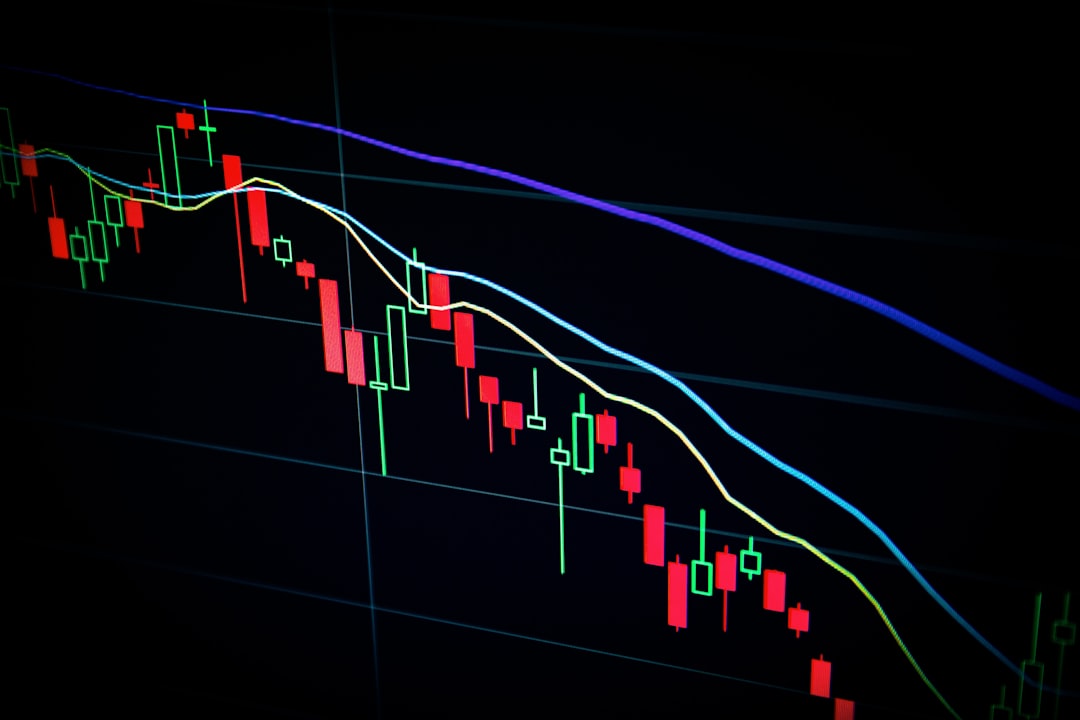
2. Average True Range (ATR) Method
Use the ATR indicator to measure volatility. Set your stop loss at a multiple of ATR (e.g., 1.5x or 2x) below your entry. For example, if ATR is 50 points and you’re trading Bitcoin, place the stop 75–100 points below. This adapts to changing market conditions.
3. Moving Average Stop
Place your stop loss below a key moving average (like the 20 EMA or 50 SMA) in an uptrend. As the trend rises, trail your stop higher. This keeps you in the trade during pullbacks but exits if the trend truly reverses.
4. Fixed Percentage Stop
A simple approach: risk 1–2% of your trading capital per trade. Calculate the stop distance based on your position size. For example, if you have a $1,000 account and risk 2% ($20), set the stop loss at a price level where the loss equals $20.
Risk Management
Never risk more than 1–2% of your total account on a single trade. This ensures one bad trade doesn’t sink you. Also, always calculate your position size before entering. Use this formula: Position Size = (Account Risk %) / (Stop Loss Distance in % of entry price). For example, if you risk 2% and your stop is 5% away, your position size is 2% / 5% = 40% of your account. Adjust accordingly.
Conclusion
Stop loss placement is an art, not a guess. Whether you use support/resistance, ATR, moving averages, or fixed percentages, the key is consistency. Backtest your strategy on historical data and refine it. Remember: a good stop loss keeps you in the game for the next winning trade. Start small, stay disciplined, and watch your trading transform.
What is Impermanent Loss? Liquidity Providing Explained
Impermanent loss is one of the most misunderstood risks in decentralized finance (DeFi). If you provide liquidity to an automated market maker (AMM) like Uniswap, PancakeSwap, or SushiSwap, you are exposed to this phenomenon. In simple terms, impermanent loss occurs when the price of assets in a liquidity pool changes compared to when you deposited them. The more volatile the price movement, the greater the loss — and it becomes ‘permanent’ only if you withdraw at that point.
This guide will break down what impermanent loss is, how it works, and how you can minimize it. We’ll also share practical tips and a tool recommendation to help you navigate liquidity provision more profitably.
Key Concepts
- Automated Market Makers (AMMs): Decentralized exchanges that use liquidity pools instead of order books. Liquidity providers deposit pairs of tokens (e.g., ETH/USDC) to earn trading fees.
- Constant Product Formula: Most AMMs use the formula x * y = k, where x and y are the reserves of two tokens. When one token’s price changes, the pool rebalances automatically, causing a divergence from holding the tokens individually.
- Impermanent Loss Calculation: The loss is the difference between the value of your LP tokens and the value of simply holding the two tokens. For example, a 2x price change in one token can lead to a ~5.7% impermanent loss; a 4x change can cause ~20% loss.
- When Loss Becomes Permanent: If you withdraw your liquidity after the price has moved, the loss is realized. If you wait for prices to return to the original ratio, the loss disappears — hence ‘impermanent.’
- Fees as Compensation: Trading fees earned by the pool can offset impermanent loss. In high-volume pools, fees may fully cover the loss over time.
Pro Tips
- Choose stablecoin pairs: Pools like USDC/USDT or DAI/USDC have minimal price divergence, so impermanent loss is near zero. You earn fees with almost no risk.
- Avoid highly volatile pairs: Pools with tokens like MEME coins or new altcoins can experience extreme price swings, leading to significant impermanent loss.
- Monitor pool fees and volume: High trading volume means more fees for you. Use tools like APY.vision or DeFi Llama to compare pools.
- Use concentrated liquidity (if available): On Uniswap V3, you can set price ranges to earn higher fees but also face higher impermanent loss if the price exits your range.
- Diversify across pools: Don’t put all your capital in one pool. Spread risk across different pairs and platforms.
For more details on this, check out our guide on The MACD Histogram Strategy: How to Catch Momentum Shifts Early.
FAQ Section
What exactly causes impermanent loss?
Impermanent loss is caused by the price divergence of the two tokens in a liquidity pool. When one token’s price rises or falls relative to the other, the AMM’s algorithm rebalances the pool, leaving you with more of the cheaper token and less of the expensive one. If you had simply held the tokens, you would have more value.
Can impermanent loss be avoided entirely?
Yes, by providing liquidity to pools with stablecoins (e.g., USDC/DAI) or by using single-sided liquidity platforms like Bancor or Tokemak. However, these may have other risks or lower yields.
How do I calculate impermanent loss?
You can use online calculators like the one at dailydefi.org or apy.vision. Simply input the price change percentage of one token relative to the other, and the calculator will show the loss.
Is impermanent loss the only risk in liquidity providing?
No. Other risks include smart contract bugs, hacks, impermanent loss from high volatility, and slippage during large trades. Always do your own research and use audited protocols.
Does impermanent loss matter if I plan to hold long-term?
Yes, because the loss can compound over time if prices continue to diverge. However, if the pool has high trading fees, you may still come out ahead. It’s important to monitor your position regularly.
You might also be interested in reading about Cold Storage vs Hot Wallets: Which Should You Choose? A Complete Guide for 2025.
Conclusion
Impermanent loss is a key concept every liquidity provider must understand. While it can eat into your profits, it is not a deal-breaker if you choose the right pools, monitor your positions, and earn sufficient trading fees. Start with stablecoin pairs to build confidence, then gradually explore more volatile pools as you learn. Remember, the best defense against impermanent loss is knowledge and strategy.
Ready to start providing liquidity? Use the tool recommendation above to get started with low fees and a reliable exchange.
Trump’s Iran Talks Lift Crypto Markets, Push Oil Below $70
March 27, 2025 — President Donald Trump’s positive comments on U.S.-Iran negotiations have triggered a broad market rally, sending Bitcoin above $60,400 and adding more than $74 billion to gold’s market value while crude oil fell below $70 per barrel for the first time since tensions escalated.
Immediate Details & Direct Quotes
Want to trade this news? Bitget offers professional charting tools and deep liquidity.
Speaking Wednesday, Trump described ongoing negotiations in Qatar as “excellent” and stated that Iran’s “denuclearization is well on its way.” He added, “We’ll see,” following a Truth Social post confirming U.S. officials would meet Iranian representatives in Doha at Tehran’s request.
Bitcoin climbed more than 3% to an intraday high of $60,401 before settling at $60,120 at press time. Ethereum gained 2.8% to $1,620, XRP added 1.5%, and Solana outperformed with a 5% advance. The total cryptocurrency market capitalization rose approximately 2% to $2.14 trillion.
U.S. benchmark WTI crude oil fell more than 2%, closing below $70 for the first time since the U.S.-Iran tensions intensified. Gold also saw significant gains, adding over $74 billion in market value during the session.
Market Context & Reaction
The rally comes as investors reduce demand for traditional safe-haven assets tied to geopolitical uncertainty. Analysts urge traders to remain cautious despite the rebound, noting negotiations are still underway and market direction will continue to depend on diplomatic developments.
Prediction market Polymarket currently assigns a 62% probability that the United States and Iran will extend their 60-day negotiation period. While this suggests traders expect diplomacy to continue, it does not guarantee a final agreement.
Separate discussions between Iran and Oman have also taken place, with both countries recently establishing a joint committee to address issues surrounding the Strait of Hormuz and other ceasefire-related matters. These talks have added to expectations that negotiations are expanding beyond the immediate nuclear issue.
Background & Historical Context
Earlier this week, renewed attention returned to comments from Rich Dad Poor Dad author Robert Kiyosaki, whose March prediction that Ethereum could reach $95,000 by mid-2027 has resurfaced across crypto social media. Kiyosaki argued that a major global financial crisis could trigger a sharp repricing of alternative assets, forecasting Ethereum at $95,000, Bitcoin at $750,000, gold at $35,000 per ounce, and silver at $200 following such an event.
Diplomatic efforts have continued beyond Trump’s latest remarks. U.S. representative Jared Kushner and envoy Steve Witkoff are in Qatar for another round of discussions, with Qatar and Pakistan serving as mediators during the negotiations.
What This Means
For now, Trump’s latest comments and the ongoing meetings in Doha have encouraged investors to price in a lower risk of further escalation. Market participants continue watching for concrete progress, since a formal agreement could extend the current rally across risk assets.
However, another breakdown in negotiations or the expiration of the 60-day deadline without an extension could reverse recent moves in cryptocurrencies, oil, and other global markets. Investors should conduct their own research and not treat this as financial advice.
The next key milestone remains the 60-day negotiation period, with Polymarket data suggesting a 62% likelihood of extension. Diplomatic developments in the coming weeks will likely determine whether this market momentum continues or reverses.
—

Mastering the Stochastic Dip: A Simple Strategy for Buying Pullbacks
Every trader loves the idea of buying the dip. But how do you know when a dip is actually a buying opportunity and not the start of a deeper crash? The Stochastic Oscillator gives us a clear, data-driven answer. By combining a simple momentum indicator with basic price action, you can spot high-probability entry points during uptrends.
How It Works
The Stochastic Oscillator measures where the current closing price sits relative to its recent price range (typically the last 14 periods). It outputs two lines: %K (the fast line) and %D (the slow moving average of %K).
- Overbought (above 80): Momentum is strong, but a reversal or pullback could happen.
- Oversold (below 20): Selling pressure is extreme, and a bounce may be near.
For dip buying, we focus on oversold conditions within an uptrend. The key is context: the overall trend must be bullish. If the market is in a downtrend, an oversold Stochastic can keep getting more oversold – that’s a falling knife, not a dip.
The Setup
Here’s a step-by-step framework for the Stochastic Dip Buy:
1. Identify the Uptrend – Look for higher highs and higher lows on a higher timeframe (daily or 4-hour). Use a simple moving average (e.g., 50 EMA) as a dynamic support.

2. Wait for a Pullback – Price retraces toward the moving average or a key support level.
3. Stochastic Goes Oversold – The %K line drops below 20. Ideally, it also crosses back above 20 (the “cross” confirmation).
4. Entry Signal – Enter a long position when the Stochastic %K crosses above %D while both are below 20, or when price shows a bullish reversal candlestick (e.g., hammer or engulfing).
5. Stop Loss – Place it below the recent swing low or below the moving average, whichever is tighter.
6. Take Profit – Target the previous high or a 1:2 risk-to-reward ratio.
Example in Action
Imagine Bitcoin is in a steady uptrend on the 4-hour chart, holding above the 50 EMA. Price pulls back, the Stochastic dips to 15, and then %K crosses above %D. You enter long at $30,000. Stop at $29,500 (below the swing low). Target $31,000. The trade works because the trend was your friend.
Risk Management
No strategy works 100% of the time. Protect your capital:
- Never risk more than 1-2% of your account on a single trade.
- Avoid using this strategy in choppy or sideways markets – the Stochastic will whip you in and out.
- Use a higher timeframe filter – if the weekly chart is bearish, don’t buy the dip on the hourly.
- Combine with volume – increasing volume on the bounce confirms buying interest.
Conclusion
The Stochastic Oscillator dip-buy strategy is a powerful tool when used with respect for the trend. It turns guesswork into a structured plan. Remember: the best dips happen in uptrends. Master this concept, and you’ll stop chasing breakouts and start buying fear with confidence.