
How to Spot a Honey Pot Scam: Safety Guide for Crypto Investors
Honey pot scams are one of the most insidious threats in decentralized finance (DeFi). These malicious smart contracts lure investors with promises of high returns, only to trap their funds permanently. This guide will teach you how to identify, avoid, and protect yourself from honey pot scams.
Key Concepts
What Is a Honey Pot Scam?
A honey pot scam is a deceptive smart contract designed to appear legitimate and profitable. The scammer creates a token or liquidity pool that allows users to buy but prevents them from selling. Once investors deposit funds, the scammer drains the liquidity or locks the tokens, leaving victims with worthless assets.
Common Red Flags
- No sell function: The contract lacks a function to sell or transfer tokens back to the owner.
- Hidden owner privileges: The contract includes functions that allow the creator to blacklist addresses, pause trading, or mint unlimited tokens.
- Fake liquidity locks: Scammers claim liquidity is locked but use a fake or expired lock contract.
- Unusual tokenomics: Extremely high buy taxes, low sell taxes, or a token supply that can be manipulated.
- Anonymous team: No verifiable team members, audits, or community presence.
Pro Tips
1. Verify the Contract Code
Always check the smart contract on a block explorer like Etherscan or BscScan. Look for functions like transfer, transferFrom, and approve. If the contract is unverified or uses obfuscated code, treat it as suspicious.
2. Test with a Small Amount
Before committing significant capital, test the token by buying and selling a tiny amount. If the sell transaction fails or returns an error, it’s likely a honey pot.
3. Use Token Sniping Tools
Tools like Honeypot.is, Token Sniffer, and RugDoc can automatically analyze a token’s contract for honey pot characteristics. Run these checks before investing.
4. Check Liquidity and Ownership
Ensure the liquidity pool (LP) tokens are locked for a reasonable period and that the contract ownership is renounced or transferred to a burn address.
💡 Pro Tip
Looking for altcoin opportunities and smooth trading? Try KuCoin.
FAQ Section
Q: Can a honey pot scam be reversed?
A: No. Once funds are trapped in a malicious smart contract, there is no central authority to reverse the transaction. The only recourse is to report the scam to the community and relevant authorities.
Q: Are honey pot scams only on Ethereum?
A: No. They are common on any blockchain that supports smart contracts, including Binance Smart Chain, Polygon, Solana, and Avalanche. Always verify contracts regardless of the chain.
Q: How do scammers make money from honey pots?
A: Scammers often create a token that appears to have high trading volume and price appreciation. They then sell their own tokens at inflated prices, or they drain the liquidity pool when enough victims have deposited funds.
Q: What should I do if I suspect a honey pot?
A: Do not invest. Report the token on platforms like RugDoc, Token Sniffer, or community forums. Share the contract address with others to warn them.
Conclusion
Honey pot scams prey on greed and inexperience. By understanding the red flags, verifying smart contracts, and using security tools, you can significantly reduce your risk. Always prioritize safety over FOMO and remember: if it looks too good to be true, it probably is.
For more details on this, check out our guide on The Role of Oracles in Real World Assets (Chainlink CCIP).
You might also be interested in reading about Carbon Credits Tokenization: Fixing a Broken Market.
How to Spot Reversals with the RSI Divergence Strategy
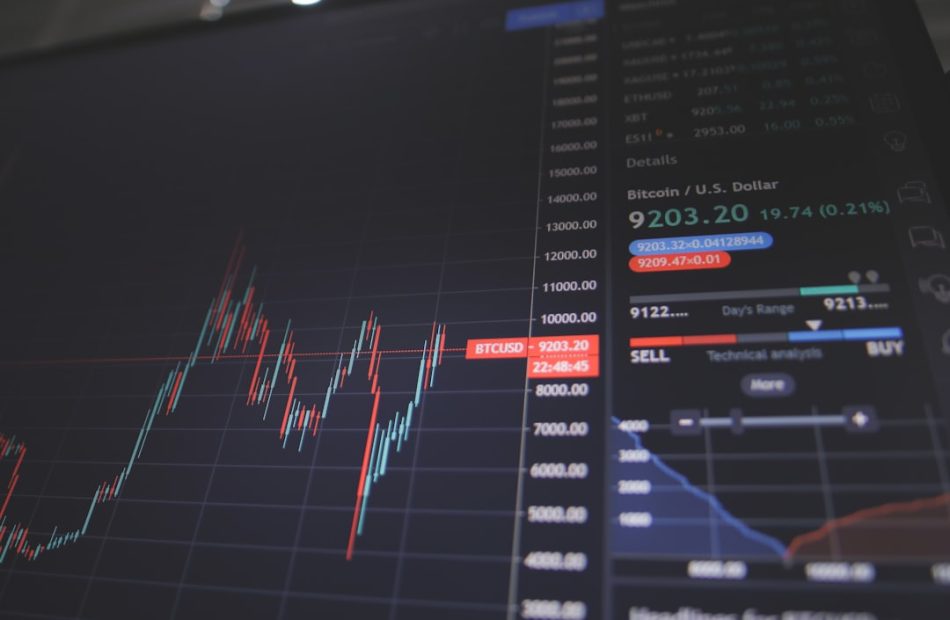
If you’ve ever stared at a chart wondering whether a trend is about to continue or reverse, you’re not alone. One of the most reliable clues comes from a tool you probably already have in your trading toolkit: the Relative Strength Index (RSI). But here’s the kicker—it’s not just about overbought or oversold levels. The real edge lies in divergence.
Divergence happens when price and RSI move in opposite directions. It’s like the market is whispering, “Something’s about to change.” Today, we’re breaking down the RSI Divergence Strategy step-by-step, so you can catch reversals early and trade with more confidence.
How It Works
RSI measures the speed and change of price movements on a scale of 0 to 100. Normally, when price makes a higher high, RSI should also make a higher high. When price makes a lower low, RSI should make a lower low. Divergence occurs when they disagree.
There are two main types:
- Bullish Divergence: Price makes a lower low, but RSI makes a higher low. This suggests selling momentum is weakening—a potential upward reversal.
- Bearish Divergence: Price makes a higher high, but RSI makes a lower high. This signals buying momentum is fading—a potential downward reversal.
The Setup
Here’s a simple framework to apply this strategy:

1. Choose your timeframe: Divergence works on any timeframe, but it’s most reliable on 1-hour, 4-hour, or daily charts.
2. Identify a clear trend: Look for obvious swings—higher highs and higher lows in an uptrend, or lower highs and lower lows in a downtrend.
3. Watch for RSI divergence: Compare the last two swing points. Are price and RSI moving in opposite directions? If yes, you’ve got a divergence signal.
4. Wait for confirmation: Don’t jump in immediately. Wait for price to break a short-term trendline or for a candlestick pattern (like a pin bar or engulfing candle) to confirm the reversal.
5. Enter the trade: For bullish divergence, go long after confirmation. For bearish divergence, go short.
Example: On a 4-hour Bitcoin chart, price makes a lower low at $60,000, but RSI prints a higher low (e.g., from 30 to 35). This is bullish divergence. You wait for price to break above the most recent swing high or a descending trendline, then enter a long position.
Risk Management
Even with a strong divergence signal, the market can fake you out. Here’s how to protect your capital:
- Place a stop-loss: For bullish divergence, put your stop below the recent swing low (the one that created the divergence). For bearish divergence, place it above the recent swing high.
- Set a risk-reward ratio: Aim for at least 1:2. If your stop is $500 away, target a profit of $1,000 or more.
- Use position sizing: Never risk more than 1-2% of your account on a single trade.
- Combine with other tools: RSI divergence works best with support/resistance levels, trendlines, or volume analysis. Don’t rely on it alone.
Conclusion
The RSI Divergence Strategy is a powerful way to anticipate trend reversals without needing complex indicators. By learning to spot when price and momentum disagree, you give yourself a head start on the crowd. Remember, no strategy is perfect—always manage your risk and practice on a demo account first.
Start scanning your favorite charts today. Look for those hidden disagreements between price and RSI. That’s where the opportunities live.
Carbon Credits: How Tokenization Is Fixing the Market
Carbon credits represent a verified reduction or removal of greenhouse gas emissions, each typically equivalent to one metric ton of CO₂. Historically, the voluntary carbon market has been plagued by opacity, double counting, high transaction costs, and illiquidity. Tokenization—the process of representing real-world assets (RWAs) on a blockchain—is now transforming this fragmented market into a transparent, liquid, and accessible asset class. The key difference lies in the off-chain vs. on-chain distinction: off-chain carbon credits exist as paper certificates or entries in centralized registries (e.g., Verra, Gold Standard), while on-chain tokens are digital representations backed by verified credits, enabling instant settlement, fractional ownership, and immutable audit trails.
How Tokenization Works for Carbon Credits
The technical process involves several layers to ensure trust and regulatory compliance:
- Tokenization & SPV: A project developer (e.g., a reforestation initiative) issues carbon credits into a registry. A Special Purpose Vehicle (SPV) is often created to legally hold the underlying credits and issue corresponding tokens on a blockchain, ensuring legal separation and investor protection.
- Oracle & Verification: Decentralized oracles (e.g., Chainlink) feed verified data from registries and third-party auditors onto the blockchain. This includes credit vintage, methodology, and retirement status, preventing double spending.
- Blockchain & Smart Contracts: The tokens (often ERC-20 or similar standards) are minted on a public blockchain. Smart contracts govern issuance, trading, and retirement (permanent removal from circulation), providing full transparency. Data from RWA.xyz shows that tokenized carbon credit volumes have grown over 300% year-over-year, with platforms like Toucan and KlimaDAO leading the charge.
Investment Analysis: Pros, Cons, and Risks
Tokenized carbon credits offer a compelling value proposition but come with distinct risks.
Pros
- Fractional Ownership & Liquidity: Investors can buy fractions of a credit, lowering the barrier to entry. 24/7 secondary markets on decentralized exchanges provide liquidity that traditional OTC markets lack.
- Transparency & Trust: Every credit’s lifecycle is recorded on-chain, reducing fraud and enabling real-time verification. Reports from BlackRock highlight that tokenization could unlock $5 trillion in illiquid assets, with carbon credits being a prime candidate.
- Global Accessibility: Anyone with an internet connection can participate, bridging the gap between TradFi and DeFi.
Cons & Risks
- Regulation: The regulatory landscape is evolving. Jurisdictions like the EU and US are scrutinizing carbon markets for greenwashing. Tokenized credits may face securities classification, impacting trading and custody.
- Smart Contract Risk: Bugs or exploits in token contracts or oracles can lead to loss of funds. Audits and insurance are essential but not foolproof.
- Quality & Additionality: Not all credits are equal. Low-quality offsets (e.g., from avoided deforestation without robust monitoring) can undermine market integrity. Investors must rely on verified registries and third-party ratings.
For a broader market view, check out our analysis on <a href="https://cryptosimplified.net/what-is-impermanent-loss-liquidity-providing-explained-17/" title="Read more: What Is Impermanent Loss? Liquidity Providing Explained” target=”_self”>What Is Impermanent Loss? Liquidity Providing Explained. Investors often compare this to What Is Impermanent Loss? Liquidity Providing Explained, as both involve understanding liquidity dynamics in tokenized markets.
Tool Recommendation
For the best charting tools to spot this pattern, try Bitget. Bitget offers advanced charting, real-time data on tokenized carbon credit pairs, and a user-friendly interface for both spot and derivatives trading. Their platform integrates seamlessly with leading DeFi protocols, making it a one-stop shop for RWA investors.
FAQ Section
Question: What is the difference between a carbon credit and a carbon offset token?
Answer: A carbon credit is a verified certificate representing one ton of CO₂ reduction or removal, issued by a registry. A carbon offset token is a blockchain-based representation of that credit, allowing for fractional ownership, trading, and retirement on-chain. The token is backed by the underlying credit held in a legal structure (SPV) or registry.
Question: Are tokenized carbon credits regulated?
Answer: Regulation varies by jurisdiction. In the US, the SEC may treat certain tokens as securities. In the EU, the MiCA framework is beginning to cover crypto-assets, including RWAs. Investors should consult legal advisors and only use platforms that comply with local laws. Many projects are working with regulators to ensure compliance.
Question: How can I verify the quality of a tokenized carbon credit?
Answer: Look for tokens backed by credits from reputable registries (Verra, Gold Standard, American Carbon Registry). Check the project’s methodology, vintage, and third-party audits. On-chain data from oracles and platforms like RWA.xyz can show retirement history and supply metrics. Avoid tokens with opaque backing or unverified claims.
Conclusion
Tokenization is not a panacea, but it is the most promising mechanism to fix the carbon credit market’s core inefficiencies: opacity, illiquidity, and high costs. By combining legal structures (SPVs), blockchain transparency, and smart contract automation, investors can access a previously inaccessible asset class with greater confidence. However, due diligence on regulation, credit quality, and smart contract risk remains paramount. For those willing to navigate these waters, tokenized carbon credits offer a unique intersection of financial return and environmental impact—a true RWA innovation.
How to Bridge Assets Across Blockchains Safely: A Complete Guide
Introduction
Bridging assets across blockchains has become essential for anyone navigating the multi-chain crypto ecosystem. Whether you’re moving ETH from Ethereum to Arbitrum or transferring stablecoins to a different network, cross-chain bridges enable interoperability. However, bridges are also prime targets for hacks and user errors. This guide walks you through the safest methods to bridge assets, covering key risks, best practices, and recommended tools.
Key Concepts
- Cross-Chain Bridge: A protocol that locks tokens on one blockchain and mints equivalent tokens on another, enabling asset transfer between networks.
- Wrapped Tokens: Tokens representing an asset from another chain (e.g., wBTC on Ethereum).
- Trustless vs. Custodial Bridges: Trustless bridges use smart contracts and validators; custodial bridges rely on a central entity to hold funds.
- Slippage & Fees: Price changes and network fees can affect the final amount received. Always check estimated output before confirming.
- Bridge Security Risks: Smart contract bugs, validator collusion, and phishing attacks are common threats.
Pro Tips
- Always double-check the destination address and chain. A single typo can result in permanent loss.
- Use bridges with a proven track record and audited smart contracts. Avoid unknown or unaudited protocols.
- Start with a small test transaction to confirm the bridge works correctly before moving larger amounts.
- Monitor network congestion – high gas fees can make bridging expensive. Use tools like GasNow or Etherscan to time your transaction.
- Keep your private keys and seed phrases offline. Never enter them into any bridge interface.
FAQ Section
What is the safest bridge to use?
There is no single safest bridge, but well-audited, widely used bridges like Stargate, Across, and Hop Protocol have strong security records. Always check recent audits and community feedback.
Can I lose my funds if a bridge gets hacked?
Yes. Bridge hacks have resulted in billions in losses. To mitigate risk, only bridge what you can afford to lose and consider using decentralized bridges with insurance or slashing mechanisms.
Do I need native gas tokens on the destination chain?
Yes. To pay for transaction fees on the destination chain, you’ll need its native token (e.g., ETH on Ethereum, MATIC on Polygon). Some bridges offer gasless bridging or include a small amount of gas in the transfer.
How long does a cross-chain bridge transaction take?
It varies from seconds to several minutes, depending on the bridge, network congestion, and finality requirements. Optimistic bridges may take longer due to fraud proof windows.
Conclusion
Bridging assets across blockchains unlocks liquidity and access to diverse DeFi opportunities, but safety must be your top priority. By understanding key concepts, following pro tips, and using reputable tools, you can minimize risks and move assets confidently. For more details on this, check out our guide on Tokenized Real Estate: How to Invest with $50. You might also be interested in reading about Carbon Credits: How Tokenization is Fixing the Market.
Bitcoin and Ether ETFs End 8-Week Outflow Streak With $282 Million in Inflows
Jul 13, 2026 — Bitcoin and ether exchange-traded funds (ETFs) finally snapped their eight-week outflow streaks, pulling in a combined $282 million as institutional demand showed signs of recovery. Spot bitcoin ETFs recorded $197.4 million in net inflows, while spot ether ETFs added $84.42 million, according to data from Sosovalue.
Immediate Details & Direct Quotes
Ready to act on this news? Open an account on Binance — the world’s largest crypto exchange.
The recovery was led by BlackRock’s IBIT, which attracted $291.9 million in inflows for the week ending July 10. Grayscale’s Bitcoin Mini Trust also saw strong demand with $95.1 million. Smaller inflows came through Morgan Stanley’s MSBT ($13.2 million), VanEck’s HODL ($9 million), and Bitwise’s BITB ($5.1 million).
However, the week wasn’t entirely positive. Grayscale’s GBTC lost $108.2 million, while Fidelity’s FBTC saw $93.4 million in outflows. Ark & 21Shares’ ARKB shed $15.3 million. The daily flow pattern showed a choppy recovery: bitcoin ETFs added $265.69 million on Monday and $21.44 million on Tuesday, then slipped into outflows of $84.86 million on Wednesday and $95.30 million on Thursday before closing with $90.44 million in inflows on Friday.
On the ether side, ETFs followed a steadier path. The category added $20.66 million on Monday, $26.93 million on Tuesday, and $70.48 million on Wednesday. Thursday brought a $52.08 million outflow, but Friday’s $18.43 million inflow secured a positive weekly close.
Market Context & Reaction
Sosovalue’s weekly update noted the pattern showed improved bitcoin ETF demand, though the recovery remains uneven. Weekly inflows represented about 0.26% of bitcoin ETF assets, based on $77.42 billion in weekend assets under management. That was enough to end the long outflow streak but still short of a strong allocation cycle.
Bitcoin’s rebound to around $63,000 suggested demand near the $60,000 area remains resilient, according to Sosovalue. Friday’s inflows showed institutions were still willing to re-enter during pullbacks.
Ether’s structure looked stronger relative to bitcoin. Based on weekend AUM of about $9.59 billion, ether ETF inflows represented roughly 0.88% of total assets — more than three times bitcoin’s relative flow intensity. ETH rose to around $1,780, while total net assets recovered from recent lows.
Sosovalue said Federal Reserve policy, inflation data, and jobs reports will determine if ETF inflows can be sustained.
Background & Historical Context
The $282 million combined inflow marked a significant turn after eight consecutive weeks of redemptions for both bitcoin and ether ETFs. The prolonged outflow period had raised concerns about institutional appetite for crypto exposure amid macroeconomic uncertainty.
Altcoin ETFs showed mixed results during the same period. Spot HYPE ETFs drew $10.36 million in net inflows despite ending Friday with a $5.73 million outflow. Spot Solana ETFs posted a modest $930,400 in net inflows. XRP ETFs were weaker, recording $7.18 million in net outflows driven mainly by Wednesday’s $7.29 million exit.
The recovery has not fully repaired the damage from two months of selling, but the pressure has eased significantly.
What This Means
Heading into the new week, the recovery’s durability will depend on whether inflation, employment data, and Federal Reserve expectations continue moving in a more supportive direction for risk assets like crypto.
For traders, the return to positive ETF flows signals that institutional investors may be finding value at current price levels, particularly near bitcoin’s $60,000 support zone. Ether’s stronger relative flow intensity suggests growing conviction in the asset among ETF investors.
Market participants should watch for sustained daily inflows in the coming week as confirmation that the outflow trend has truly reversed. A repeat of negative days could signal the recovery is fragile.

Mastering the Wyckoff Method: The Smart Money Blueprint for Crypto Trading
If you’ve ever watched a crypto chart and felt like the market was moving against you—pumping right after you sold, or dumping just after you bought—you’re not alone. The truth is, large institutional players (often called ‘Smart Money’) orchestrate many of these moves. The Wyckoff Method, developed by Richard Wyckoff in the early 1900s, is one of the most powerful tools to decode their game. It’s a time-tested framework that reveals accumulation, distribution, and the phases of price action. Let’s break it down in a way that’s simple, actionable, and crypto-friendly.
How It Works
The Wyckoff Method is built on three core laws:
1. The Law of Supply and Demand – When demand exceeds supply, price rises. When supply exceeds demand, price falls. Simple, but powerful.
2. The Law of Cause and Effect – A period of accumulation (cause) leads to an uptrend (effect). A period of distribution leads to a downtrend.

3. The Law of Effort vs. Result – Look for divergences between volume and price. High volume with little price movement often signals a pending reversal.
Wyckoff identified specific phases that repeat in every market cycle. In crypto, these phases are especially clear because of the emotional swings of retail traders.
The Setup
The classic Wyckoff cycle has four phases:
- Phase A: Accumulation (or Distribution) Begins – Smart Money starts buying (or selling) in a range. Price action is tight, volume is low. Look for a ‘spring’ (fake breakdown) in accumulation, or an ‘upthrust’ (fake breakout) in distribution.
- Phase B: The ‘Cause’ is Built – The range continues, but volume patterns shift. In accumulation, you’ll see lower volume on dips and higher volume on rallies. In distribution, the opposite happens.
- Phase C: The Test – A final shakeout (for accumulation) or rally (for distribution) tests the range extremes. If volume is low on the test, the move is likely genuine.
- Phase D: The Markup or Markdown Begins – Price breaks out of the range with conviction. Volume should be higher than average. This is your entry zone.
- Phase E: The Trend – Price moves strongly in the new direction. Don’t fight it—ride the wave.
To spot these phases on a crypto chart, use a 4-hour or daily timeframe. Look for horizontal support/resistance zones, and watch volume carefully. A simple volume bar chart is enough.
Risk Management
Even the best Wyckoff setup can fail. Here’s how to protect your capital:
- Set a Stop Loss – For a long setup, place your stop just below the spring low (Phase C). For a short, just above the upthrust high. If price breaks that level, the setup is invalid.
- Position Sizing – Never risk more than 1-2% of your portfolio on a single trade. Wyckoff is about probabilities, not certainty.
- Wait for Confirmation – Don’t jump in at the first sign of a breakout. Wait for a retest of the breakout level (Phase D) with low volume. This reduces false moves.
- Take Partial Profits – When price moves in your favor, take 50% off at the first resistance (for longs) or support (for shorts). Let the rest run with a trailing stop.
Remember, the Wyckoff Method is a lens to see the market’s structure, not a crystal ball. Combine it with other tools like RSI or moving averages for extra confidence.
Conclusion
The Wyckoff Method gives you an edge by helping you think like the institutions. Instead of chasing pumps or panicking during dumps, you’ll recognize the underlying phases of accumulation and distribution. Start by practicing on Bitcoin or Ethereum charts—mark the phases manually. Over time, you’ll develop an intuition for Smart Money’s next move. The market is a game of psychology and preparation. Now you have the blueprint. Go take your seat at the table.
How to Spot a Honey Pot Scam: Safety Guide
Honey pot scams are one of the most deceptive threats in decentralized finance (DeFi). These malicious smart contracts lure investors with promises of high returns, only to trap their funds permanently. This guide explains how honey pots work, how to identify them, and how to protect your crypto assets.
Key Concepts
- What is a Honey Pot Scam? A honey pot is a smart contract that appears to allow token purchases or trades but contains hidden code that prevents selling or transferring tokens. Once you deposit funds, you cannot withdraw them.
- Common Indicators: Unusually high buy taxes, no sell function, suspicious liquidity locks, anonymous teams, and copy-pasted code from known scam contracts.
- How Scammers Profit: They often front-run or manipulate the contract to drain liquidity, or they rely on victims buying tokens that can never be sold.
Pro Tips
- Always verify the contract code on Etherscan or BscScan. Look for functions like
transfer,sell, andwithdraw— if they are missing or restricted, it’s a red flag. - Test with a small amount first. If you can’t sell even a tiny fraction of the token, the contract is likely a honey pot.
- Use token analysis tools like Honeypot.is, Token Sniffer, or RugDoc to automatically scan for malicious code.
- Check liquidity locks and team token allocations. If liquidity is not locked or the team holds a large supply, the project is risky.
FAQ Section
What is a honey pot scam in crypto?
A honey pot scam is a malicious smart contract that allows users to buy tokens but prevents them from selling or transferring those tokens, trapping their funds.
How can I detect a honey pot before investing?
Use tools like Honeypot.is, check the contract code for restricted sell functions, test with a small amount, and verify liquidity locks and team transparency.
Can I recover funds from a honey pot scam?
In most cases, no. Once funds are sent to a honey pot contract, they are permanently locked. The best defense is prevention through thorough due diligence.
Are honey pot scams only on Ethereum?
No, they exist on any blockchain that supports smart contracts, including Binance Smart Chain, Polygon, Solana, and others.
Conclusion
Honey pot scams remain a serious threat in the crypto space, but with the right knowledge and tools, you can avoid them. Always verify contract code, test small amounts, and use reputable analysis platforms. For more details on this, check out our guide on Jake Claver Predicts BlackRock XRP ETF as XRPL Adoption Grows. You might also be interested in reading about CryptoQuant Bull-Bear Signal Explained: What Bitcoin’s Green Light Means for You.
Security Tokens vs Utility Tokens: The RWA Investor Guide
Security tokens and utility tokens represent two fundamentally different asset classes in the tokenized economy. For investors in Real World Assets (RWAs), understanding this distinction is critical for compliance, risk management, and portfolio strategy. This guide explains the differences, the tokenization process, and how to evaluate these instruments.
What Are Security Tokens?
A security token is a digital representation of ownership in an underlying real-world asset—such as equity in a company, a share in a real estate fund, or a bond—that is issued and traded on a blockchain. These tokens are subject to federal securities regulations (e.g., SEC rules in the US) and typically offer holders rights like dividends, voting, or profit sharing. In contrast, utility tokens grant access to a product or service within a blockchain ecosystem and are not designed as investments.
The core difference is off-chain vs on-chain value. Security tokens derive their value from off-chain assets (real estate, corporate equity, debt), while utility tokens derive value from on-chain network usage (e.g., gas fees, governance).
How Tokenization Works: The Technical Process
Tokenizing a real-world asset into a security token involves several steps to ensure legal and technical integrity:
- Asset Selection & Legal Structuring: An asset (e.g., a commercial building) is placed into a Special Purpose Vehicle (SPV)—a legal entity that isolates the asset from the issuer’s balance sheet.
- Token Creation: The SPV issues digital tokens on a blockchain (often Ethereum or a permissioned chain) representing fractional ownership. Each token corresponds to a specific percentage of the asset’s value.
- Oracle Integration: Oracles (e.g., Chainlink) feed real-world data—such as property appraisals, rental income, or interest rates—onto the blockchain to maintain accurate token pricing and yield calculations.
- Compliance Layer: Smart contracts enforce transfer restrictions (e.g., accredited investor checks) and automate dividend or interest distributions.
Reports from BlackRock and data from RWA.xyz show that tokenized securities now exceed $12 billion in total value locked, with real estate and private credit leading adoption.
Investment Analysis: Pros, Cons, and Risks
Pros
- Fractional Ownership: Investors can buy small portions of high-value assets (e.g., $100 of a $10 million building), lowering entry barriers.
- 24/7 Liquidity: Secondary trading on decentralized exchanges enables near-instant settlement, unlike traditional real estate or private equity.
- Transparency: All transactions and asset data are recorded on-chain, reducing fraud and improving auditability.
Cons & Risks
- Regulatory Uncertainty: Jurisdictions differ on how security tokens are classified. The SEC’s Howey Test often applies, but global rules remain fragmented.
- Smart Contract Risk: Bugs in token contracts or oracles can lead to loss of funds. Audits are essential but not foolproof.
- Market Liquidity Risk: While 24/7 trading is possible, actual liquidity depends on buyer interest. Illiquid tokens may trade at discounts.
For a broader market view, check out our analysis on How to Bridge Assets Across Blockchains Safely: A Complete Guide for 2025.
Investors often compare this to Identity on Chain: KYC and Compliance in DeFi for RWAs.
Tool Recommendation: Charting and Analysis
For the best charting tools to spot trends in security token markets, try Bitget. Their platform offers real-time RWA token data, order book depth, and compliance filters—essential for professional analysis.
FAQ Section
Question: What is the main difference between a security token and a utility token?
Answer: A security token represents ownership in an external, real-world asset and is regulated as a security. A utility token provides access to a blockchain service or product and is not intended as an investment vehicle.
Question: Are security tokens legal in the United States?
Answer: Yes, but they must comply with SEC regulations, including registration or exemption (e.g., Regulation D, Regulation A+). Issuers must verify investor accreditation and follow disclosure requirements.
Question: How do I evaluate the risk of a tokenized real estate asset?
Answer: Assess the underlying asset’s quality (location, cash flow), the SPV’s legal structure, the smart contract’s audit history, and the liquidity of the secondary market. Diversify across asset types and issuers.
Conclusion
Security tokens bridge TradFi and DeFi by bringing regulated, income-producing assets onto blockchains. They offer fractional ownership, transparency, and potential liquidity—but carry regulatory and technical risks. For serious investors, understanding the utility vs security distinction is non-negotiable. As the RWA sector matures, security tokens will likely become a core portfolio component for those seeking yield and diversification.
Circle Hosts Seoul Event to Deepen Ties With Korean Financial Firms
July 23, 2025 — Circle is scaling its South Korea outreach by hosting an invitation-only industry event in Seoul this month, as the stablecoin issuer pursues new partnerships with banks, crypto exchanges, and payments firms. The event, called Current Seoul, will take place July 23 at Josun Palace under the theme “Korea at a Crypto Inflection,” bringing together senior executives from major financial institutions.
Immediate Details & Direct Quotes
Ready to act on this news? Open an account on Binance — the world’s largest crypto exchange.
Circle’s Seoul gathering follows CEO Jeremy Allaire’s visit to South Korea in April, during which he met with executives from KB Kookmin Bank, Shinhan Bank, Hana Bank, Upbit, Bithumb, and several payments companies to explore potential collaborations. Industry officials cited by The Korea Herald confirmed that the event’s agenda includes discussions on regulation, industry cooperation, and long-term business partnerships.
The speaker lineup features Circle Chief Strategy Officer and Head of Global Policy and Operations Dante Disparte, Asia-Pacific Strategy and Policy Vice President David Allan Katz, Business Development Vice President Ben Morris, and Asia-Pacific Head Yam Ki Chan. On the Korean financial industry side, Kakao Pay CEO Shin Won-keun and Bae, Kim & Lee partner Park Jong-baek are scheduled to speak, according to the event registration page.
During his April visit, Allaire described South Korea as a “highly attractive” market due to its advanced technology sector, active digital asset participation, and established legal framework. He also said Circle was interested in working with Korean companies through the Circle Payments Network for cross-border payments.
Market Context & Reaction
The Seoul event comes days after Circle strengthened its regulated financial infrastructure in the United States. As previously reported by crypto.news, the company received final approval from the U.S. Office of the Comptroller of the Currency on July 10 to establish Circle National Trust, a federally supervised national trust bank. Circle said the trust bank will initially provide digital asset custody services for the company and its affiliates before potentially expanding to eligible institutional clients. It could also support future management of USDC reserves, although the company has not announced a timeline for that transition.
Circle has expanded USDC’s banking partnerships in recent weeks. Earlier this month, Standard Chartered launched an integrated service with Circle allowing eligible institutional clients to mint and redeem USDC through the bank’s platform without opening direct Circle accounts. The service debuted through Standard Chartered’s Dubai International Financial Centre operations, combining fiat banking, custody, and blockchain infrastructure for institutional users. BNY has also deepened its relationship with Circle by adding USDC as the first stablecoin supported on its digital asset custody platform.
Background & Historical Context
The Korea expansion comes as competition among dollar-backed stablecoin issuers continues to increase. Circle shares fell 17% on June 30 following the launch of Open USD (OUSD), a competing stablecoin model that allows participating companies to share income generated from reserve assets. The revenue-sharing structure differs from USDC’s model, where Circle retains control over reserve income and partnership terms.
Open USD’s rollout has faced questions over its announced consortium. As previously reported by crypto.news, several South Korean companies, including Samsung Electronics, Dunamu, Shinhan Financial Group, and K Bank, said they had not formally agreed to join the project despite being listed as participants. According to Chosun Biz, the companies said they had only discussed the proposal or expressed interest in reviewing it, while Open Standard has said OUSD will distribute reserve income among consortium members instead of retaining those earnings itself.
What This Means
Circle’s deepening engagement with South Korean financial institutions signals the company’s strategic push into one of Asia’s most active digital asset markets. The company’s focus on regulated banking infrastructure and institutional partnerships positions USDC to capture a larger share of the stablecoin market, particularly as regulatory frameworks develop.
For South Korean banks and exchanges, partnerships with Circle could offer new revenue streams through stablecoin-based services, including cross-border payments and digital asset custody. The immediate impact will likely center on regulatory clarity and business development outcomes from the Current Seoul event.
Long-term implications include potential expansion of Circle Payments Network in Asia, increased institutional adoption of USDC in South Korea, and intensified competition with new stablecoin models like Open USD. Market participants should monitor announcements from Circle’s Seoul event for concrete partnership details and product launches.
—
Mastering the Gap Fill Strategy: How to Profit from Market Inefficiencies
Have you ever noticed how markets seem to have a magnetic pull toward certain price levels? If you’ve been watching crypto or stock charts, you’ve likely seen gaps – those empty spaces where price jumps suddenly, leaving a void behind. The Gap Fill Strategy is a powerful, time-tested approach that exploits this phenomenon. It’s not about predicting the future; it’s about understanding that markets often return to fill those voids, creating reliable trading opportunities. Let’s dive into how you can use this strategy to find high-probability setups.
How it Works
A gap occurs when an asset’s price opens significantly higher or lower than its previous close, with no trading in between. In crypto, this often happens due to news events, exchange listing announcements, or over-the-weekend sentiment shifts. The core idea is simple: gaps act like magnets. Price tends to retrace back to the gap area to “fill” it, because that price level represents a zone where liquidity was left behind. Think of it as a loose thread – markets love to pull it tight.
There are four main types of gaps: breakaway gaps (start of a trend), runaway gaps (mid-trend), exhaustion gaps (end of a trend), and common gaps (random noise). For our strategy, we focus on common gaps – those that occur without strong fundamental catalysts. These are the ones most likely to fill quickly, often within days or even hours.
The Setup
Here’s a step-by-step guide to identifying and trading a gap fill:
1. Spot the Gap: Look for a clear price gap on your chart (use a 1-hour or 4-hour timeframe for crypto). The gap should be between the previous day’s close and the current day’s open.

2. Confirm the Context: Ensure the gap is not part of a major breakout or breakdown. Avoid trading gaps that align with strong news (e.g., a sudden regulatory announcement). Stick to “noise” gaps.
3. Mark the Zone: Draw a horizontal line across the top and bottom of the gap. This is your target zone.
4. Entry: Wait for price to start moving back toward the gap. Enter a trade (long if the gap is downward, short if it’s upward) when price shows a clear rejection of the gap’s edge, ideally with a candlestick pattern like a pin bar or engulfing candle.
5. Target: Set your profit target at the opposite side of the gap. For example, if the gap is from $50 to $55, aim for $50 (if shorting) or $55 (if longing).
6. Time Limit: If the gap hasn’t started filling within 3-5 candles on your timeframe, consider skipping the trade. Gaps that don’t fill quickly may indicate stronger momentum.
Risk Management
No strategy is perfect, and gaps can sometimes fail to fill. Here’s how to protect your capital:
- Stop Loss: Place your stop just beyond the gap’s edge. For a long trade on a downward gap, set the stop below the gap’s low. For a short trade on an upward gap, set it above the gap’s high. This keeps your risk small (typically 1-2% of your account).
- Position Size: Never risk more than 1% of your trading capital on a single gap trade. Crypto is volatile, and a gap that doesn’t fill can move against you fast.
- Avoid Overtrading: Not all gaps are tradable. If the gap is too wide (e.g., more than 5% of the asset’s price), the risk of a false move increases. Stick to gaps that are 1-3% in size.
- Watch for News: If a major catalyst created the gap (e.g., a hack or partnership), the gap may not fill because the price move is justified. In those cases, step aside.
Conclusion
The Gap Fill Strategy is a beautiful blend of simplicity and logic. By understanding that markets often correct inefficiencies, you can position yourself for quick, low-risk trades. Start by practicing on a demo account – identify gaps on Bitcoin or Ethereum charts and watch how they behave. Over time, you’ll develop an intuition for which gaps are likely to fill. Remember, patience is key: wait for the right setup, manage your risk, and let the market do the work. Happy trading, and may your gaps always fill!