
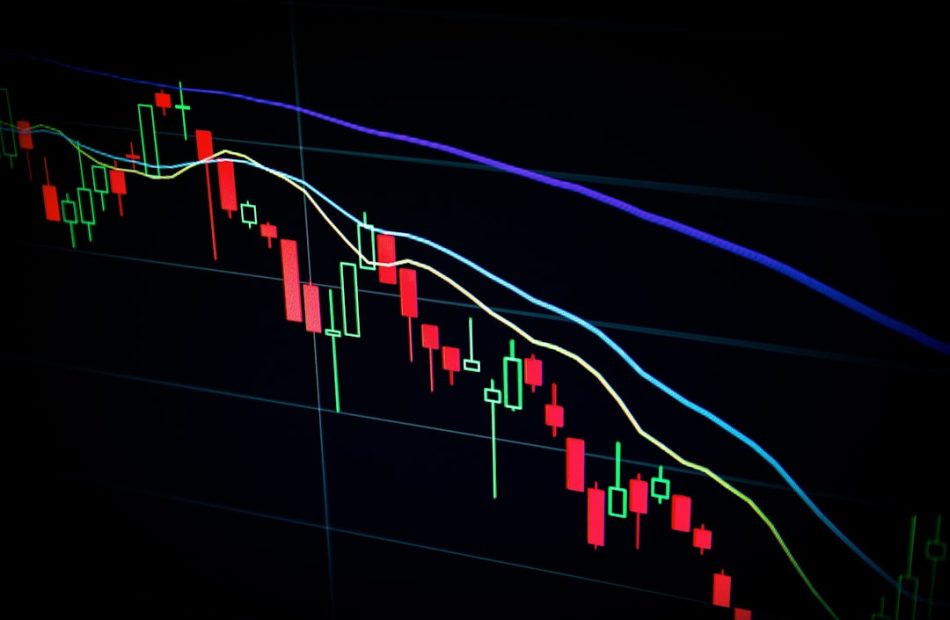
The Revenge Trade Trap: How to Stop Letting Losses Control Your Portfolio
You just took a bad loss. Maybe you ignored your stop-loss, or the market faked you out. Your heart is pounding, your screen is glowing, and all you want to do is ‘get it back’ right now. That urge? That’s revenge trading, and it’s one of the fastest ways to blow up an account. Let’s break down why it happens and, more importantly, how to stop it.
What Is Revenge Trading?
Revenge trading is when you enter a trade not because of a solid setup, but because you’re angry or frustrated from a previous loss. You’re trying to “punish” the market or make back what you lost in one quick move. It’s emotional, impulsive, and almost always ends badly.
How It Works
The cycle usually goes like this:
Looking for altcoin opportunities and smooth trading? Try KuCoin.
1. You lose money on a trade (often because of a mistake).
2. You feel upset, anxious, or angry.
3. You immediately open a new position, often larger or riskier than normal, without a clear plan.

4. The market moves against you again, deepening the loss.
5. The cycle repeats until you either stop or run out of capital.
The Setup (How to Spot It Coming)
Revenge trading doesn’t appear out of nowhere. Watch for these warning signs:
- You’re checking charts while still feeling emotional from a loss.
- You’re increasing position size to “win back” money faster.
- You’re entering trades without a stop-loss or take-profit.
- You feel a sense of urgency, like you must trade right now.
How to Break the Cycle
1. Step Away – After a loss, close your trading platform. Walk away for at least 30 minutes. Go outside, drink water, or do something unrelated.
2. Review Your Journal – Write down what went wrong. Was it your setup? Your risk? Your emotions? Seeing it on paper reduces the emotional charge.
3. Lower Your Risk – If you must trade, reduce your position size to 25% of normal. This keeps you in the game without letting emotions blow up your account.
4. Set a Daily Loss Limit – Decide before the session starts how much you’re willing to lose. Once you hit that number, you’re done for the day. No exceptions.
Risk Management for Your Mind
Risk management isn’t just about stop-losses and position sizing. It’s also about managing your mental state. Create a pre-trade checklist:
- Am I calm?
- Does this trade fit my strategy?
- Is my stop-loss in place?
- Am I trading to make money, or to get revenge?
If the answer to the last question is “revenge,” close the screen. That’s your most powerful risk management tool.
Final Thoughts
Revenge trading is a trap that catches every trader at some point. The difference between success and failure isn’t avoiding losses—it’s how you respond to them. Build habits that protect your capital and your mind. The market will always be there tomorrow. Make sure your account is too.
OpenAI’s GPT-5.6 Models Sol, Terra, Luna: A Crypto Name Game Explained
Did you know that two of the most recognizable names in crypto—Solana and Terra—just got borrowed by the world’s leading AI company? When OpenAI announced its latest GPT-5.6 models with the names Sol, Terra, and Luna, crypto users immediately took notice. While the company insists the names simply denote technical capabilities, the coincidence was impossible for the crypto community to ignore. For anyone following digital assets, understanding why these names matter—and why they don’t—is essential for separating market noise from genuine news. This guide explains what OpenAI actually announced, why crypto users reacted strongly, and what this tells us about the growing intersection between artificial intelligence and blockchain technology.
Read time: 8-10 minutes
Understanding OpenAI’s GPT-5.6 Model Naming for Beginners
Model naming in AI products is the practice of assigning distinct identifiers to different versions of artificial intelligence software, helping users understand which variant suits their needs. Think of it like car model names—a “Sports” trim versus an “Eco” trim tells you something about the vehicle’s capabilities without needing to read the engine specs.
Why does this matter for crypto users? Because project names in both AI and crypto serve as powerful branding tools that shape public perception. OpenAI chose “Sol,” “Terra,” and “Luna” to describe three tiers of its latest GPT-5.6 model family. Sol is the flagship model with advanced reasoning capabilities, Terra is a balanced option for everyday tasks, and Luna is the fast, lower-cost entry point.
A real-world crypto parallel: when a blockchain project launches tokens named after physical assets (like “Gold” or “Silver”), it creates instant associations that influence how people perceive the project’s value, whether intended or not.
The Technical Details: How OpenAI’s Model Lineup Actually Works
OpenAI’s GPT-5.6 family represents a spectrum of capabilities designed for different use cases. Here’s what each model brings:
1. Sol (Flagship Model): The most powerful option, introducing new “max” and “ultra” modes for advanced reasoning and agent-based workflows. It handles complex tasks requiring extended processing, such as multi-step research or sophisticated coding projects.
2. Terra (Balanced Model): Positioned as a middle-ground option optimized for everyday tasks. It offers strong performance without the computational overhead of Sol, making it suitable for routine queries and content generation.
3. Luna (Fast/Entry Model): The most efficient and affordable option, designed for quick responses and simpler tasks. It serves as the budget-friendly entry point into the GPT-5.6 ecosystem.
These three models sit between OpenAI’s high-end GPT-5.5 offering and its more affordable options. The entire GPT-5.6 family delivers enhanced capabilities in coding, scientific research, and cybersecurity compared to earlier versions.
Flow diagram of OpenAI’s model hierarchy: A visual showing Sol at top (advanced reasoning), Terra in middle (balanced), Luna at base (fast and affordable), with arrows indicating decreasing complexity and cost.
Current Market Context: Why This Matters Now
As of mid-2026, the intersection of AI and crypto continues to generate significant market attention. OpenAI’s model naming announcement triggered immediate discussion across crypto-focused social media platforms, reviving memories of two major blockchain projects.
The name “Sol” closely resembles Solana’s native token ticker (SOL), one of the largest cryptocurrencies by market capitalization. Meanwhile, “Terra” and “Luna” directly echo the Terra blockchain ecosystem, whose algorithmic stablecoin collapse in 2022 erased tens of billions in market value and remains one of the industry’s most discussed failures.
Importantly, OpenAI explicitly stated the names were chosen solely to indicate model capabilities and have no connection to cryptocurrency projects. The company said Sol, Terra, and Luna represent different capability levels within the GPT-5.6 series—not endorsements or partnerships.
This announcement comes shortly after OpenAI introduced “Jalapeño,” its first custom-built AI chip developed with Broadcom. That processor was built in nine months and is designed for inference workloads powering ChatGPT, Codex, and future AI agents. OpenAI’s hardware development signals growing independence and flexibility as AI computing demand increases.
Competitive Landscape: How OpenAI’s Announcement Compares
The naming controversy highlights broader trends at the intersection of tech and crypto:
| Feature | OpenAI’s Model Naming | Crypto Project Branding | Public Reaction |
|---|---|---|---|
| Intent | Technical capability description | Brand identity and community building | Mixed—some see coincidence, others strategic |
| Brand Recognition | Leverages familiar terms (Sol, Terra, Luna) | Builds unique identity from scratch | Creates instant associations, both positive and negative |
| Risk of Confusion | Low—different industry entirely | High—competing projects use similar names | Crypto users more sensitive due to past collapses |
| Outcome | Likely short-term discussion, no lasting impact | Long-term brand equity or liability | Reminder of crypto’s mainstream awareness |
Why this matters for users: The naming coincidence doesn’t change either OpenAI’s technology or crypto fundamentals. However, it demonstrates how deeply crypto terminology has penetrated mainstream tech culture.
Practical Applications: Real-World Use Cases
What can you actually learn from this news?
- Distinguishing Signal from Noise: Not every coincidence is a market signal. OpenAI’s model names don’t indicate any crypto partnership or endorsement.
- Understanding Market Psychology: The strong reaction shows how past events (like Terra’s collapse) shape current market sentiment. Traders remain sensitive to any mention of failed projects.
- Tracking AI-Crypto Convergence: While this specific announcement lacks crypto relevance, the broader trend of AI companies developing custom hardware (like OpenAI’s Jalapeño chip) could eventually impact crypto mining or blockchain AI applications.
Risk Analysis: Expert Perspective
Primary Risks:
1. Misinterpretation Risk: Users might mistakenly believe OpenAI’s naming indicates endorsement of or partnership with Solana or Terra projects. OpenAI explicitly denies this.
2. FUD Amplification: Bad actors could spread misinformation suggesting OpenAI’s involvement with Terra resurrecting interest in the failed project.
3. Market Noise: The naming controversy distracts from understanding what GPT-5.6 actually offers—genuine improvements in coding, research, and cybersecurity capabilities.
Mitigation Strategies:
- Always verify partnerships through official channels, not social media speculation
- Focus on technology fundamentals rather than naming coincidences
- Check multiple sources before acting on any news that seems too aligned with market narratives
Expert Consensus: This is a coincidence, not a signal. OpenAI chose names that sound familiar and are easy to remember—a common marketing practice. The crypto community’s strong reaction reflects lingering trauma from the Terra collapse and general sensitivity to brand overlap.
Future Outlook: What’s Next
The GPT-5.6 rollout remains limited while safety testing continues. OpenAI noted that Sol’s new reasoning modes are designed for complex tasks requiring extended processing, suggesting future applications in research and development.
Reports indicate the White House asked OpenAI to limit the initial rollout of GPT-5.6, though the company didn’t link its limited preview to any government request. Broader public release will follow additional safety testing.
In a separate development, Amazon withdrew from distributing “Artificial,” a film centered on OpenAI CEO Sam Altman that also features Elon Musk. Amazon continues discussions with filmmakers about finding another distributor, while simultaneously expanding its commercial relationship with OpenAI through a multi-billion-dollar investment.
For crypto markets, the naming discussion will likely fade as users focus on whether GPT-5.6’s capabilities represent meaningful AI advancement. The key takeaway: not every crypto-adjacent name carries crypto implications.
Key Takeaways
- OpenAI’s model names (Sol, Terra, Luna) are coincidental and explicitly unrelated to cryptocurrency projects, despite triggering strong community reactions.
- The naming highlights crypto’s mainstream cultural penetration—even AI companies use terms familiar from blockchain.
- Always verify partnerships through official channels rather than assuming connections based on name similarity.
- Focus on technology fundamentals over naming speculation to make informed decisions about both AI and crypto developments.
How to Read a Smart Contract Audit Report: A Comprehensive Guide for Crypto Investors
Smart contract audits are essential for verifying the security and reliability of decentralized applications (dApps) and blockchain protocols. However, audit reports can be dense and technical, making it challenging for non-developers to interpret them. This guide will break down the key components of a smart contract audit report, explain how to identify critical issues, and provide actionable tips for making informed investment decisions.
Key Concepts
1. What Is a Smart Contract Audit?
A smart contract audit is a systematic review of a blockchain project’s code by a third-party security firm. The goal is to identify vulnerabilities, logical errors, and inefficiencies that could lead to financial loss or exploitation. Audits typically include manual code review, automated testing, and simulation of attack scenarios.
2. Common Sections in an Audit Report
- Executive Summary: A high-level overview of the audit findings, including the overall risk rating (e.g., Low, Medium, High, Critical).
- Scope: Lists the specific contracts, files, and functions that were reviewed.
- Methodology: Describes the tools and techniques used (e.g., Slither, MythX, manual review).
- Findings: Detailed descriptions of each vulnerability, categorized by severity. Each finding includes a title, description, impact, and recommended fix.
- Remediation Status: Indicates whether the project team has addressed the issues (e.g., Fixed, Acknowledged, Partially Fixed).
- Disclaimer: States that the audit is not a guarantee of security and that residual risks may remain.
3. Severity Levels Explained
Most audit firms use a standard severity scale:
- Critical: Vulnerabilities that can lead to loss of funds or permanent contract failure. These must be fixed before deployment.
- High: Issues that could cause significant financial damage or disrupt core functionality.
- Medium: Problems that may affect performance or user experience but are not immediately exploitable.
- Low: Minor issues like code style violations or informational warnings.
- Informational: Suggestions for improvement that do not pose security risks.
Pro Tips
- Always check the audit date: Code can change after an audit. Look for the latest report and verify that all critical findings have been resolved.
- Cross-reference multiple audits: Reputable projects often commission audits from two or more firms. Compare findings to get a fuller picture.
- Look for the “Remediation” section: A report that lists “Fixed” for all critical and high issues is a good sign. “Acknowledged” without a fix may indicate the team is ignoring risks.
- Understand the scope: If the audit only covered a small portion of the codebase, other parts may still be vulnerable.
- Don’t rely solely on audits: Audits are a snapshot in time. Combine them with bug bounty programs, formal verification, and ongoing monitoring.
💡 Pro Tip
Looking for altcoin opportunities and smooth trading? Try KuCoin.
FAQ Section
Q1: Can I trust a project that has an audit report?
An audit is a positive signal, but it is not a guarantee of safety. Always consider the reputation of the audit firm, the recency of the report, and whether the findings have been resolved. For more details on this, check out our guide on Bitcoin Slides as Coinbase Premium Index Hits Monthly Low.
Q2: What should I do if a project has no audit?
Proceed with extreme caution. Unaudited smart contracts are high-risk investments. Look for projects that prioritize security and have at least one audit from a well-known firm.
Q3: How do I verify that an audit report is authentic?
Check the audit firm’s official website or social media for the report. Scammers sometimes fake audit reports. You might also be interested in reading about Bitcoin Layer 2s: Stacks, Lightning, and Runes Guide – Scaling Bitcoin for DeFi & Payments.
Q4: What is the difference between a security audit and a code review?
A security audit focuses on vulnerabilities and exploits, while a code review is a broader assessment of code quality, efficiency, and best practices. Many audit reports combine both.
Conclusion
Reading a smart contract audit report is a critical skill for anyone involved in DeFi, NFTs, or blockchain investing. By understanding the structure, severity levels, and remediation status, you can better assess the risk of a project before committing capital. Remember that audits are just one piece of the security puzzle—always do your own research (DYOR) and diversify your investments. Stay safe and informed!
Former Ethereum Foundation Leader Warns of Funding Gap as EF Steps Back
June 26, 2026 — A former Ethereum Foundation (EF) member is warning that the network faces a critical funding gap as the organization intentionally reduces its central role. Trent Van Epps, who left the EF after it accelerated its “subtraction” philosophy, told CoinDesk that the Ethereum ecosystem must quickly build new funding institutions to support core development, which requires roughly $30 million annually.
Immediate Details & Direct Quotes
Looking for altcoin opportunities and smooth trading? Try KuCoin.
Van Epps said he departed the Ethereum Foundation after it became clear the organization would push authority and legitimacy into the broader ecosystem rather than consolidating power. He described the EF as intentionally reducing its central role, arguing that multiple independent institutions should eventually coordinate the ecosystem.
“Ethereum faces a practical funding challenge rather than an existential crisis,” Van Epps said during an interview with CoinDesk’s Jennifer Sanasie on Markets Outlook. He estimated that core protocol development requires approximately $30 million annually, even as the Ethereum Foundation’s treasury gradually declines over time.
Van Epps noted that the issue is not shrinking technical needs but identifying new organizations willing to finance public goods that keep the network reliable and secure. His Protocol Guild initiative has distributed nearly $40 million to Ethereum core developers over roughly four years, but he said that is not sufficient on its own to replace broader ecosystem funding.
The warnings come after recent Ethereum Foundation leadership changes and workforce reductions, which have fueled questions about Ethereum’s future governance.
Market Context & Reaction
Van Epps remains bullish on Ethereum despite the funding concerns. He argued that Ethereum continues to lead in decentralized finance (DeFi), stablecoin settlement, and Ethereum Virtual Machine (EVM) adoption, saying those network effects remain difficult for competitors to match.
While acknowledging near-term coordination challenges, Van Epps said he is optimistic that new institutions and major stakeholders will emerge to help finance Ethereum’s shared infrastructure. He pointed to the “free rider” problem as a key obstacle to solving the funding gap, where firms benefit from shared infrastructure without contributing to its maintenance.
As of June 26, 2026, the Ethereum ecosystem is navigating this transition with the EF stepping back from its historically central role. Market reaction to the funding gap warning has been muted, with traders assessing whether new institutions will step in to fill the void.
Background & Historical Context
The Ethereum Foundation has long served as the primary steward of the Ethereum network, funding core development, research, and ecosystem grants. However, in recent years, the organization has pursued a deliberate strategy of “subtraction”—gradually reducing its influence and pushing authority to independent entities across the ecosystem.
This governance shift has accelerated with recent leadership changes and workforce reductions at the EF, raising questions about how the network will maintain its critical infrastructure without a central funding body. The Protocol Guild, which Van Epps helped establish, was designed to address this transition by directly funding core developers through a decentralized model.
Van Epps outlined a vision where the EF continues operating in a narrower role alongside newer organizations focused on research, commercialization, and ecosystem growth. He argued Ethereum also needs stronger advocacy around ETH as an asset and a clearer narrative connecting the token to the network’s expanding on-chain economy.
What This Means
Van Epps believes Ethereum’s governance will become more distributed over the next decade, with success measured by broad adoption. He expects billions of users will ultimately access Ethereum and its Layer 2 ecosystem.
In the short term, the Ethereum ecosystem faces a coordination challenge: new funding institutions must emerge to replace the EF’s declining treasury. Major stakeholders, including DeFi protocols, Layer 2 networks, and institutional holders, may need to contribute to shared infrastructure.
Long term, the transition could strengthen Ethereum’s decentralization thesis if multiple independent institutions successfully coordinate funding. However, the free rider problem remains a significant obstacle, as firms that benefit from Ethereum’s infrastructure may resist contributing.
For investors and developers, the key question is whether new funding mechanisms will emerge quickly enough to maintain core development without interruption. The next 12-18 months will be critical as the ecosystem tests whether decentralized governance can effectively fund public goods.
—

Mastering Supply and Demand Zones: The Trader’s Blueprint for High-Probability Entries
Have you ever watched a price chart and wondered why it seems to bounce off certain invisible lines like clockwork? Those aren’t just random levels—they’re supply and demand zones, and they form the backbone of some of the most consistent trading strategies in the crypto market. Forget complicated indicators; these zones reveal the raw battle between buyers and sellers, giving you a clear edge in your trades.
How It Works
Supply and demand zones are areas on the chart where price has historically shown a strong reaction. A supply zone is where selling pressure overwhelms buyers, causing price to drop. A demand zone is where buying pressure dominates, pushing price higher. These zones form because of institutional order flow—large players leave footprints when they accumulate or distribute assets.
Think of it like this: when a big buyer steps in, they create a demand zone (a price level where they bought heavily). Later, when price returns to that zone, that same buyer might defend it, or new buyers see it as a bargain. Similarly, supply zones act as resistance because sellers remember the pain of buying high and want to exit there.
The Setup
To trade supply and demand zones effectively, follow these steps:
1. Identify a strong move: Look for a sharp, impulsive price move (a “drop” or “rally”) that leaves a clear base. The zone is the area just before that impulsive move started.

2. Mark the zone: Draw a horizontal rectangle covering the consolidation area (the “base”) where price stalled before the big move. For a demand zone, this is the bottom of the drop; for a supply zone, it’s the top of the rally.
3. Wait for a retest: Patience is key. Let price return to the zone. If it touches the zone and shows a reversal candlestick (like a hammer or a shooting star), that’s your signal.
4. Enter the trade: For a demand zone, buy when price touches the zone and bounces. For a supply zone, sell (or short) when price touches and rejects.
5. Set your stop-loss: Place your stop just below the demand zone (for buys) or just above the supply zone (for sells). This protects you if the zone breaks.
Here’s a pro tip: The stronger the initial impulsive move, the more reliable the zone. A zone formed on a 1-hour chart is more significant than one on a 5-minute chart. For crypto, focus on higher timeframes (4H or daily) for zones that hold for days or weeks.
Risk Management
No strategy works 100% of the time, and supply/demand zones are no exception. Here’s how to protect your capital:
- Always use a stop-loss: Never enter a zone trade without one. The zone is your edge, but if it breaks, you need to exit quickly.
- Position size wisely: Risk no more than 1-2% of your account per trade. If your stop is wide (e.g., 5% away), reduce your position size accordingly.
- Watch for false breaks: Sometimes price dips slightly into a demand zone and then reverses. Other times, it slices through and continues. Wait for a confirmed reversal candle (like a bullish engulfing or a long wick) before entering.
- Don’t chase: If price moves away from the zone without a retest, let it go. FOMO leads to losses. There’s always another trade.
- Combine with volume: If you can, check volume. A zone with high volume during the initial move is more likely to hold. Low volume zones are weaker.
Conclusion
Supply and demand zones are a simple yet powerful tool that puts you in sync with the smart money. By focusing on areas where institutions have placed large orders, you can trade with the flow rather than against it. Start by practicing on a demo chart—mark zones on Bitcoin or Ethereum and watch how price reacts. Over time, you’ll develop an intuition for which zones are worth trading. Remember, consistency comes from patience and discipline, not from chasing every move. Master these zones, and you’ll see the market in a whole new light.
BlackRock BUIDL: Institutional Crypto Entry Guide
BlackRock’s BUIDL fund marks a pivotal moment for Real World Assets (RWAs) in crypto. This guide explains how institutional money is entering the tokenized economy, the mechanics behind it, and what it means for investors.
What Is BlackRock BUIDL and Why Does It Matter?
BUIDL (BlackRock USD Institutional Digital Liquidity Fund) is a tokenized money market fund launched on the Ethereum blockchain. It represents a bridge between traditional finance (TradFi) and decentralized finance (DeFi). Unlike off-chain assets that trade only during market hours and require intermediaries, on-chain tokenization enables 24/7 liquidity, fractional ownership, and programmable transparency. BlackRock’s entry signals that RWAs—such as Treasury bills, bonds, and credit—are now a legitimate institutional asset class.
How BUIDL Works: The Technical Process
The tokenization of real-world assets follows a structured process:
- Asset Selection: BlackRock selects short-term U.S. Treasury bills and cash equivalents as underlying collateral.
- Special Purpose Vehicle (SPV): A legal SPV holds the off-chain assets, isolating them from bankruptcy risk.
- Tokenization: The SPV issues ERC-20 tokens (BUIDL) on Ethereum, each representing a proportional claim on the underlying fund.
- Oracle Integration: Price oracles (e.g., Chainlink) feed real-time net asset value (NAV) data on-chain to ensure transparency.
- Blockchain Settlement: Investors can buy, sell, or transfer BUIDL tokens 24/7 on supported exchanges and DeFi protocols.
Investment Analysis: Pros, Cons, and Risks
Pros
- Institutional-Grade Yield: BUIDL targets yields from short-term Treasuries, currently competitive with high-yield savings accounts.
- 24/7 Liquidity: Tokenized shares can be traded any time, unlike traditional money market funds.
- Transparency: On-chain data allows real-time verification of holdings and NAV.
- Fractional Ownership: Low minimum investment opens access to institutional-grade assets.
Cons
- Regulatory Uncertainty: Tokenized securities face evolving SEC and global regulations.
- Smart Contract Risk: Bugs or exploits in the token contract could lead to loss of funds.
- Counterparty Risk: The SPV and custodian (e.g., BNY Mellon) must remain solvent.
Risks
- Market Risk: Treasury yields can fluctuate, affecting returns.
- Oracle Risk: Incorrect NAV feeds could lead to mispricing.
- Liquidity Risk: In stressed markets, secondary trading may dry up.
For a broader market view, check out our analysis on The Magic of Support and Resistance Flips: How Old Walls Become New Floors. Investors often compare this to Master the 1% Rule: The Golden Rule of Trading Risk Management.
Tool Recommendation: Where to Trade BUIDL Tokens
To trade tokenized RWAs like BUIDL efficiently, choose an exchange with low fees and high liquidity. Low fees are crucial for this strategy. We recommend MEXC. Start trading on MEXC.
Frequently Asked Questions
What is the minimum investment for BlackRock BUIDL?
The minimum investment is typically $100,000 for accredited investors, though secondary market purchases on exchanges may have lower thresholds.
Is BUIDL available to retail investors?
Currently, BUIDL is limited to accredited investors. However, retail investors can gain exposure through DeFi protocols that integrate BUIDL as collateral or yield-bearing assets.
How does BUIDL generate yield?
BUIDL invests in short-term U.S. Treasury bills and cash equivalents. The yield is distributed to token holders proportionally, typically via a daily rebasing mechanism.
Conclusion: Final Verdict on BlackRock BUIDL
BlackRock BUIDL represents a watershed moment for RWAs in crypto. It offers institutional-grade yield with blockchain efficiency, but investors must weigh regulatory and smart contract risks. As the first major money market fund on-chain, it sets a precedent for future tokenized assets. For those seeking exposure, low-fee platforms like MEXC provide a practical entry point.
Real World Assets (RWA): How Tokenization Changes Investing
Tokenization of real-world assets (RWA) is reshaping the investment landscape by bringing physical and traditional financial assets onto blockchain networks. This guide explores how RWA tokenization works, its benefits, risks, and practical tips for investors looking to participate in this emerging sector.
Key Concepts
What Are Real World Assets (RWA)?
Real World Assets refer to tangible or intangible assets that exist outside the blockchain, such as real estate, commodities (gold, oil), bonds, equities, art, intellectual property, and even carbon credits. Tokenization converts ownership rights of these assets into digital tokens on a blockchain, enabling fractional ownership, increased liquidity, and global accessibility.
How Tokenization Works
Tokenization involves creating a digital representation (token) of an asset on a blockchain. Each token represents a share or claim on the underlying asset. Smart contracts govern the issuance, transfer, and redemption of tokens, ensuring transparency and automation. The process typically includes legal structuring to ensure tokens are compliant with securities regulations.
Benefits of RWA Tokenization
- Fractional Ownership: Investors can buy small portions of high-value assets like real estate or fine art, lowering entry barriers.
- Increased Liquidity: Tokens can be traded on secondary markets 24/7, providing exit options that traditional assets lack.
- Global Access: Anyone with an internet connection can invest, bypassing geographical and institutional restrictions.
- Transparency and Security: Blockchain records immutable ownership and transaction history, reducing fraud.
- Programmability: Smart contracts enable automated dividends, interest payments, or compliance checks.
Risks and Challenges
- Regulatory Uncertainty: Many jurisdictions still lack clear frameworks for tokenized assets.
- Custody and Legal Ownership: Ensuring that token holders have legal recourse to the underlying asset is complex.
- Smart Contract Risk: Bugs or exploits in code can lead to loss of funds.
- Market Liquidity: Some tokenized assets may still suffer from low trading volumes.
Pro Tips
When investing in RWA tokens, always verify the legal structure and audit reports. Look for projects that partner with regulated custodians and have clear redemption processes. Diversify across different asset types to mitigate sector-specific risks. Monitor gas fees on Ethereum or layer-2 networks, as high costs can eat into returns.
For more details on this, check out our guide on What Is Impermanent Loss? A Complete Guide to Liquidity Providing Risks.
FAQ Section
What types of assets can be tokenized?
Almost any asset can be tokenized, including real estate, stocks, bonds, commodities, art, collectibles, intellectual property, and even revenue streams. The key requirement is a clear legal framework to link the token to the underlying asset.
Is RWA tokenization legal?
It depends on the jurisdiction. Many countries are developing regulations for digital securities. Projects must comply with securities laws, KYC/AML requirements, and sometimes obtain specific licenses. Always check the regulatory status of a project before investing.
How do I buy RWA tokens?
RWA tokens are typically available on decentralized exchanges (DEXs) or specialized platforms. Some projects conduct direct sales or use launchpads. You’ll need a compatible wallet (e.g., MetaMask) and the native token of the blockchain (e.g., ETH for Ethereum-based tokens).
What are the fees involved?
Fees include blockchain transaction fees (gas), platform trading fees, and sometimes management fees for the asset. Fractional ownership may also involve custody fees. Always compare total costs before investing.
Can I redeem my tokens for the underlying asset?
Redemption policies vary. Some projects allow direct redemption of the physical asset (e.g., gold tokens), while others only offer cash equivalents. Read the project’s whitepaper and terms carefully.
Conclusion
Real World Asset tokenization is a transformative trend that bridges traditional finance with decentralized technology. It democratizes access to high-value investments, enhances liquidity, and introduces programmability to asset management. However, investors must navigate regulatory, technical, and custodial risks. By conducting thorough due diligence, using secure platforms, and staying informed about legal developments, you can capitalize on this growing sector.
You might also be interested in reading about BlackRock BUIDL: Institutional Crypto Entry Guide.

The Golden Cross: Your Guide to One of Crypto’s Most Powerful Trend Signals
Imagine seeing a clear, flashing green light that tells you a major uptrend is just getting started. That’s exactly what the Moving Average Golden Cross aims to do. It’s one of the oldest and most respected signals in technical analysis, and in the volatile world of crypto, it can be a game-changer for your trading.
How It Works
The Golden Cross occurs when a shorter-term moving average (like the 50-day MA) crosses above a longer-term moving average (like the 200-day MA). This simple crossover signals that the recent momentum is shifting from bearish to bullish. It’s not a guarantee, but historically it has marked the beginning of powerful rallies in Bitcoin, Ethereum, and other major coins.
The Setup
To trade the Golden Cross, you need a chart with two moving averages plotted. Here’s the classic setup:
1. Choose your time frame: Daily charts are the most reliable for this signal.

2. Add the MAs: Plot the 50-day Simple Moving Average (SMA) and the 200-day SMA.
3. Wait for the crossover: The signal is generated when the 50-day MA crosses above the 200-day MA.
4. Confirm volume: Ideally, you want to see trading volume increasing as the crossover happens. This adds conviction.
Remember, the Golden Cross is a lagging indicator — it confirms a trend that has already started. It works best when combined with other tools like support/resistance levels or RSI.
Risk Management
No signal is perfect. Here’s how to protect your capital:
- Set a stop-loss: Place it just below the recent swing low or below the 200-day MA itself. If the price falls back below the MA, the signal is invalid.
- Don’t chase: If the crossover happened days ago and the price is already up 20%, wait for a pullback to enter.
- Use position sizing: Never risk more than 1-2% of your portfolio on a single trade.
- Beware of fakeouts: In choppy or sideways markets, MAs can cross back and forth (a “whipsaw”). Wait for a clear, sustained break above the 200-day MA.
The Golden Cross is a powerful tool, but it’s not a crystal ball. Use it as part of a complete strategy, and always manage your risk first.
Conclusion
Mastering the Golden Cross gives you a timeless edge. It helps you align with the long-term trend and avoid trying to catch falling knives. Start by scanning your favorite crypto pairs on the daily chart, and when you see that 50-day MA cross above the 200-day MA — pay attention. With proper risk management, this simple signal can become a cornerstone of your trading approach.
How to Bridge Assets Across Blockchains Safely: A Complete Guide for 2024
Bridging assets across blockchains has become a fundamental part of the decentralized finance (DeFi) ecosystem. Whether you’re moving ETH from Ethereum to Arbitrum, or swapping tokens between Solana and BNB Chain, cross-chain bridges enable interoperability. However, bridges are also prime targets for hacks and exploits. This guide will walk you through the safest methods, key risks, and best practices for bridging assets across blockchains.
Key Concepts
1. What is a Cross-Chain Bridge?
A cross-chain bridge is a protocol that allows you to transfer tokens or data from one blockchain to another. It typically locks your assets on the source chain and mints a wrapped version on the destination chain.
2. Types of Bridges
- Trusted Bridges: Rely on a central authority or federation (e.g., WBTC, Binance Bridge). Faster but require trust.
- Trustless Bridges: Use smart contracts and cryptographic proofs (e.g., Hop Protocol, Synapse). More secure but slower.
- Liquidity Networks: Use atomic swaps and liquidity pools (e.g., Connext, Across). Efficient but limited to supported pairs.
3. Common Risks
- Smart Contract Exploits: Bugs in bridge code can lead to loss of funds (e.g., Wormhole, Ronin Bridge).
- Validator Collusion: In trusted bridges, validators could steal funds.
- Front-Running & MEV: Malicious actors can manipulate transaction ordering.
- Phishing & Fake Bridges: Scammers create fake bridge interfaces to steal your private keys.
Pro Tips
- Always verify the official bridge URL. Bookmark it from the project’s official documentation or Twitter account.
- Start with a small test transaction. Send a minimal amount first to confirm the bridge works correctly.
- Check bridge liquidity. Ensure the destination chain has enough liquidity to mint your tokens.
- Use bridges with audited smart contracts. Look for audits from firms like Trail of Bits, OpenZeppelin, or Certik.
- Monitor bridge TVL and reputation. Higher total value locked (TVL) often indicates trust and security.
- Never share your private keys or seed phrase. Legitimate bridges will never ask for them.
- Consider using a hardware wallet. For large transfers, a Ledger or Trezor adds an extra layer of security.
💡 Pro Tip
Looking for altcoin opportunities and smooth trading? Try KuCoin.
FAQ Section
Q: What is the safest bridge to use?
A: There is no single safest bridge. Trustless bridges like Hop Protocol, Synapse, and Across are generally considered safer than trusted bridges because they rely on code rather than human validators. Always check recent audits and community feedback.
Q: How long does a bridge transaction take?
A: It varies. Trusted bridges can complete in minutes, while trustless bridges may take 10–30 minutes depending on block confirmation times and network congestion.
Q: Can I bridge any token?
A: Not all tokens are supported on every bridge. Check the bridge’s supported asset list. Native tokens (e.g., ETH, USDC) are most commonly supported, while obscure altcoins may have limited options.
Q: What happens if a bridge gets hacked?
A: If a bridge is exploited, your funds may be lost. Some bridges have insurance funds or have reimbursed users in the past, but it’s not guaranteed. Always diversify your risk and avoid keeping large amounts on any single bridge.
Q: Do I need gas on both chains?
A: Yes. You need the native token of the source chain to pay for the initial transaction, and the native token of the destination chain to pay for the minting or claim transaction. For example, to bridge from Ethereum to Polygon, you need ETH on Ethereum and MATIC on Polygon.
Conclusion
Bridging assets across blockchains is an essential skill for any DeFi user, but it comes with significant risks. By understanding the types of bridges, common attack vectors, and following best practices like using audited protocols and starting with small test transactions, you can minimize your exposure. Always stay updated on the latest security news and bridge vulnerabilities.
For more details on this, check out our guide on Zcash Bug Debate Sparks Questions on Privacy Coin Risks.
You might also be interested in reading about Oracles in Real World Assets: Chainlink CCIP Guide.
How SPVs Protect RWA Investors: A Complete Guide
Real World Assets (RWAs) represent a transformative asset class that bridges traditional finance (TradFi) and decentralized finance (DeFi). By tokenizing tangible or intangible assets—such as real estate, bonds, commodities, and credit—on a blockchain, RWAs enable fractional ownership, 24/7 liquidity, and unprecedented transparency. However, the off-chain nature of these assets introduces unique risks. This is where Special Purpose Vehicles (SPVs) play a critical role in protecting investors.
Off-Chain vs. On-Chain: The Core Challenge
RWAs exist in two layers: the off-chain legal title (e.g., a property deed) and the on-chain token (e.g., a digital representation). Without a robust legal structure, token holders may have no enforceable claim to the underlying asset. SPVs solve this by acting as a legal wrapper that holds the asset off-chain, while the blockchain records ownership of tokens representing shares in the SPV. This ensures that token holders have a direct, legally recognized interest in the asset.
How SPVs Work in RWA Tokenization
The technical process involves several key steps:
- Asset Selection & Due Diligence: An asset (e.g., a commercial property) is identified and valued by third-party auditors.
- SPV Formation: A legal entity (the SPV) is created to hold the asset. This entity is bankruptcy-remote, meaning its liabilities are separate from the issuer.
- Tokenization: The SPV issues digital tokens on a blockchain (e.g., Ethereum) that represent fractional ownership. Each token corresponds to a pro-rata share of the SPV’s equity or debt.
- Oracle Integration: Oracles (e.g., Chainlink) feed real-world data—such as asset valuations, rental income, or interest payments—onto the blockchain, enabling smart contracts to automate distributions.
- Secondary Market Trading: Tokens can be traded on compliant exchanges, providing liquidity that traditional private assets lack.
Investment Analysis: Pros, Cons, and Risks
SPV-based RWA investing offers compelling advantages but also carries distinct risks.
Pros
- Legal Protection: SPVs isolate the asset from the issuer’s bankruptcy, safeguarding investor claims.
- Fractional Ownership: Low minimum investments allow retail investors access to institutional-grade assets.
- Transparency: On-chain records provide immutable proof of ownership and transaction history.
- Liquidity: Secondary markets enable 24/7 trading, unlike traditional private placements.
Cons
- Regulatory Complexity: SPVs must comply with securities laws in multiple jurisdictions, increasing legal costs.
- Smart Contract Risk: Bugs or exploits in token contracts could lead to loss of funds.
- Oracle Dependency: Inaccurate data feeds can trigger incorrect distributions or liquidations.
Risks
- Regulatory Risk: Changing laws (e.g., SEC classification of tokens as securities) could impact token tradability.
- Counterparty Risk: The SPV’s administrator or custodian may act maliciously or become insolvent.
- Market Risk: The underlying asset’s value may decline, leading to token depreciation.
For a broader market view, check out our analysis on ETH/SOL Ratio Trading: A Smarter Way to Play the Layer-1 Battle. Investors often compare this to The Rise of AI Agents in Crypto: A Complete Guide.
Tool Recommendation
For investors seeking exposure to RWA tokens or other altcoin opportunities, a reliable platform is essential. KuCoin offers a wide range of RWA-related tokens with competitive fees and robust security. Looking for altcoin opportunities and smooth trading? Try KuCoin. https://www.kucoin.com/r/af/rBPFKE7
Frequently Asked Questions
What happens if the SPV issuer goes bankrupt?
Because the SPV is a separate legal entity, its assets are not part of the issuer’s bankruptcy estate. Token holders retain their claim to the underlying asset, which is held by the SPV. However, legal proceedings may delay distributions.
Are RWA tokens considered securities?
In most jurisdictions, tokens representing ownership in an SPV are classified as securities under the Howey Test (U.S.) or equivalent regulations. Issuers must comply with securities laws, including registration or exemption requirements.
How do oracles ensure data accuracy for RWAs?
Oracles aggregate data from multiple trusted sources (e.g., property appraisers, bond issuers) and use consensus mechanisms to verify accuracy. Leading networks like Chainlink also employ decentralized node operators to reduce manipulation risk.
Conclusion
Special Purpose Vehicles are the backbone of secure RWA tokenization, providing the legal and structural framework that protects investors from issuer insolvency and ensures enforceable ownership rights. While regulatory and smart contract risks remain, the combination of SPVs with blockchain technology offers a powerful way to democratize access to real-world assets. As the ecosystem matures, SPVs will likely become the standard for compliant, investor-protected RWA offerings.